Passive House Meets ICF — Part 1: The Design Process
Print
Email
At A Glance
Why a high-performance builder chose ICF for a Passive House project
How energy modeling influenced wall design, insulation, and window placement
Where ICF simplified the Passive House design process—and where it didn’t
Key detailing considerations for airtight connections and assemblies
Lessons learned from applying ICF in a Passive House context
Read on for some compelling insights from Dennis Borren, High-Performance Builder.
Insulated Concrete Forms are typically associated with strength and energy efficiency—but, somewhat surprisingly, they are not commonly used in Passive House construction. For Dennis Borren, a high-performance builder in Central Alberta, that disconnect didn’t make sense. Rather than debating it theoretically, he decided to test it the only way that matters: by building his own Passive House using Element ICF.
In this first installment of our 6-part in-depth video and blog series, Dennis explains why he chose ICF, how energy modeling shaped the design, and where Passive House requirements influenced detailing decisions.
You can continue reading below, or watch this 4 minute interview segment to hear Dennis discuss this aspect of the project in his own words.
Why did you choose ICF for this Passive House?
For me, it came down to familiarity and execution.
Any product can be outstanding on paper, but if the person installing it doesn’t fully understand how it works, the performance won’t be what it’s intended to be. ICF is a product I’m comfortable with and have experience using, and that matters—especially on a Passive House where tolerances are tight and mistakes are costly.
Choosing a system you understand well helps tremendously. It allows you to focus on solving performance challenges rather than learning a new construction method at the same time.
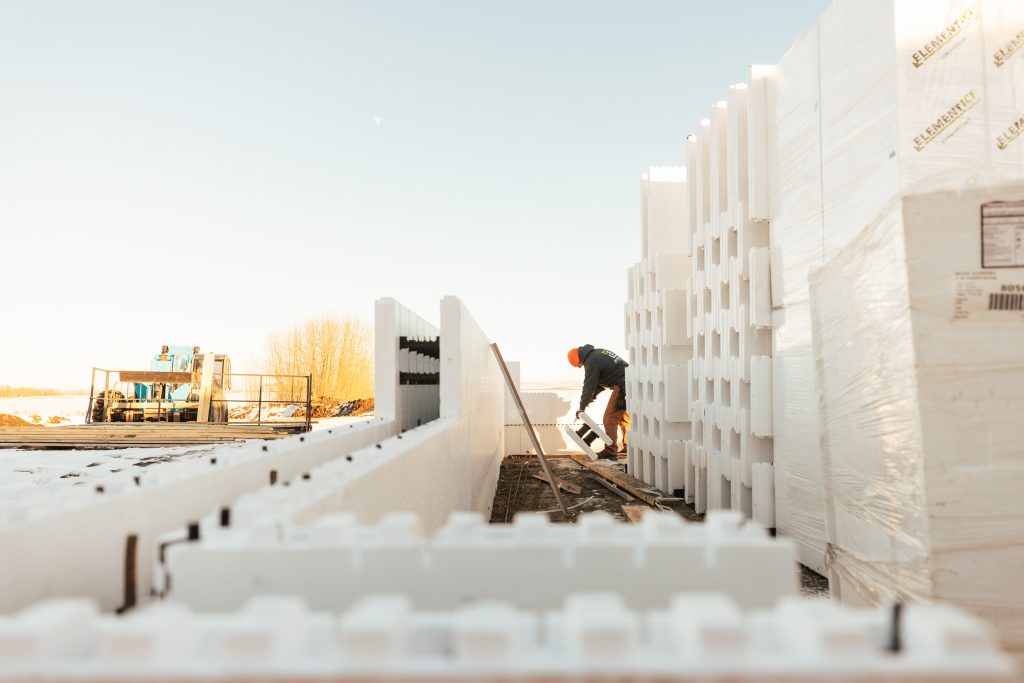
Building with a system you know. For this Passive House, familiarity with Element ICF helped keep the focus on execution—not relearning a wall system.
How did energy modeling influence the design choices?
Energy modeling played a big role, especially around window placement and insulation strategy.
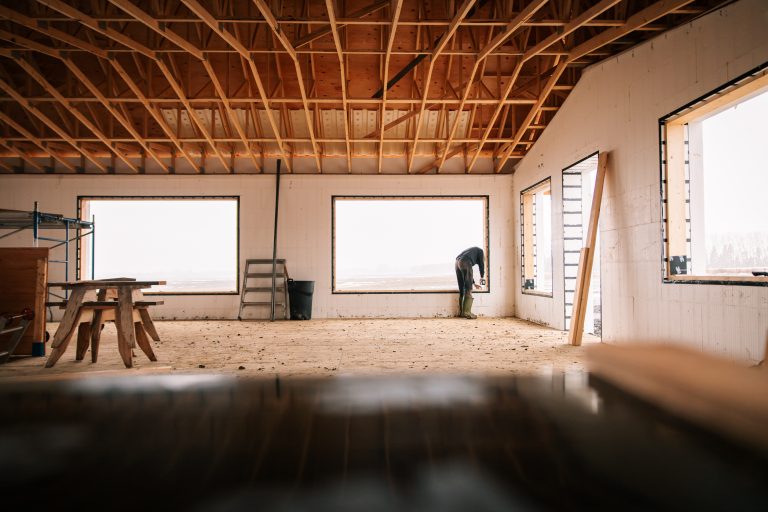
One of the main decisions influenced by modeling was where the windows sit within the wall assembly. In this house, the windows are installed roughly midway through the wall assembly, which helped optimize thermal performance.
The other major factor was insulation—how much we needed overall, how much went on the exterior of the building, and how much insulation was required beneath the foundation. Those decisions weren’t guesswork; they were driven directly by the modeling results.
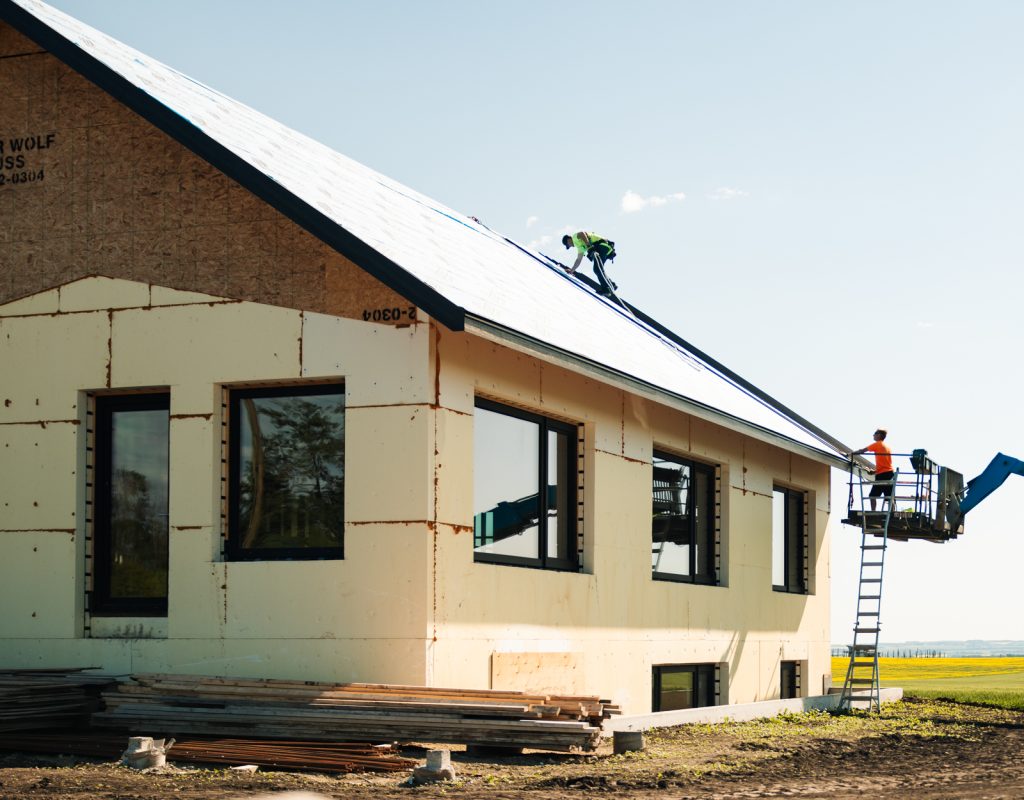
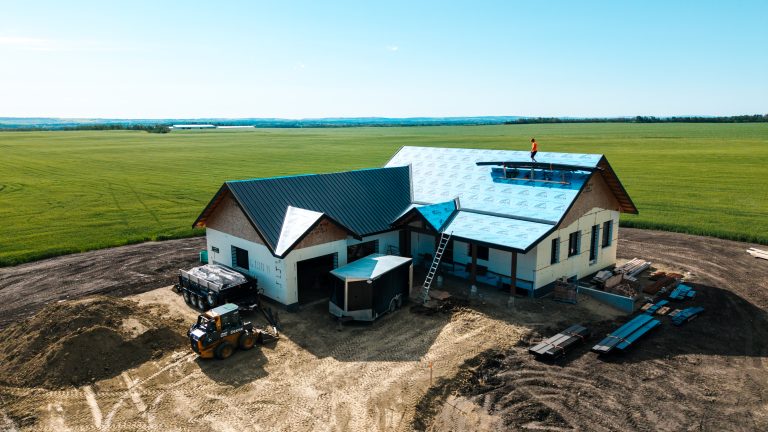
Windows installed mid-wall within the ICF assembly. Placement was driven by energy modeling to optimize thermal performance and reduce thermal bridging.
How were Passive House thermal requirements met using ICF blocks?
The ICF blocks got us a good part of the way there.
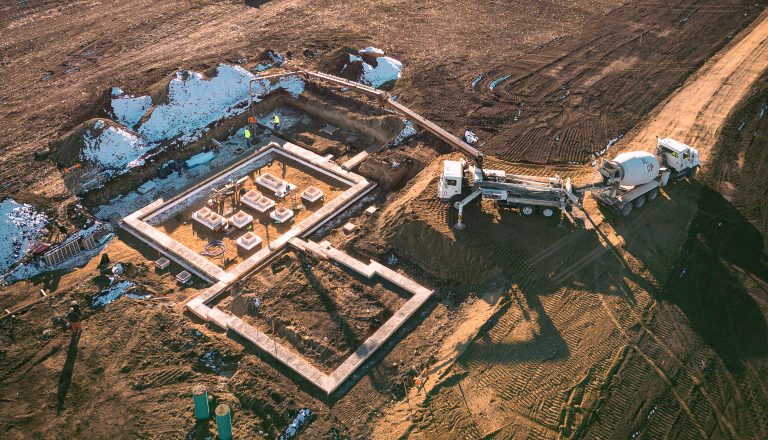
We were working with an assembly around the low R-20s, which is strong, but not enough on its own to meet Passive House requirements in our climate. To get there, we did need to add additional insulation to the exterior of the building and under the foundation.
ICF formed the backbone of the wall system, and supplemental insulation allowed us to fine-tune the assembly to hit the target.
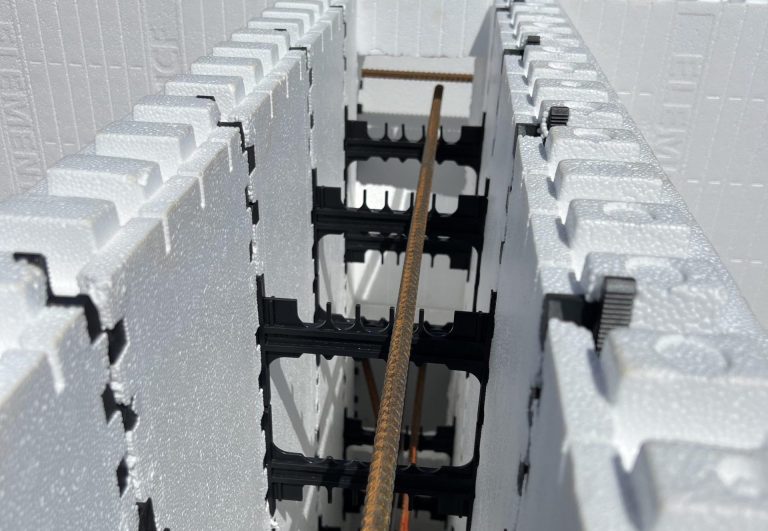
ICF formed the backbone of the wall assembly, with additional exterior and below-slab insulation added to meet Passive House performance targets.
Did ICFs simplify or reduce design complexity compared to other wall systems?
In my opinion, yes—significantly.
With ICF, you’re executing multiple layers of the building enclosure in one step. You have your air barrier. You have your insulation. You have your structure. It’s one integrated system, rather than a collection of separate layers that all have to work together perfectly.
That integration reduces the number of steps required to reach the same performance outcome, which simplifies both design and construction.
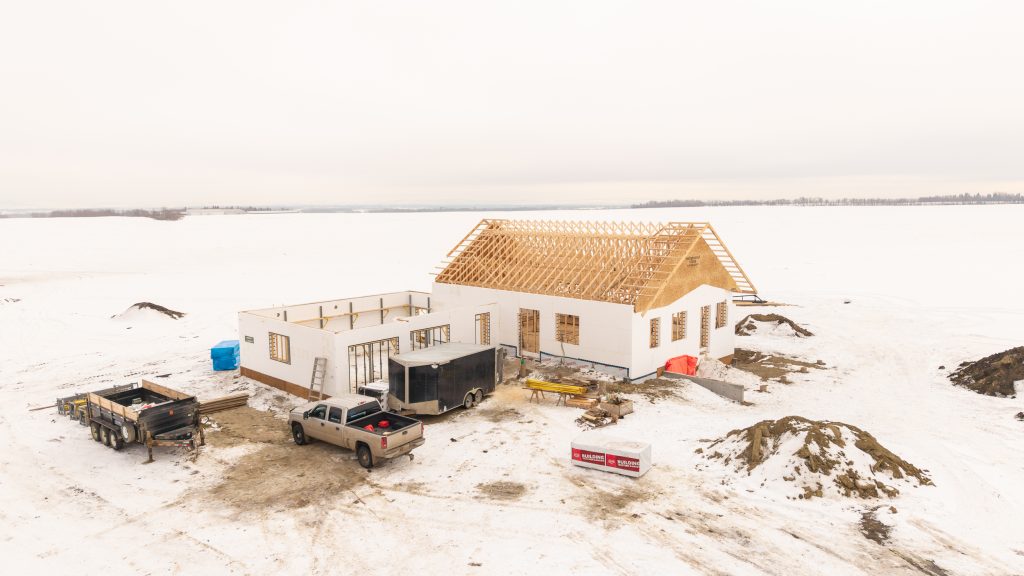
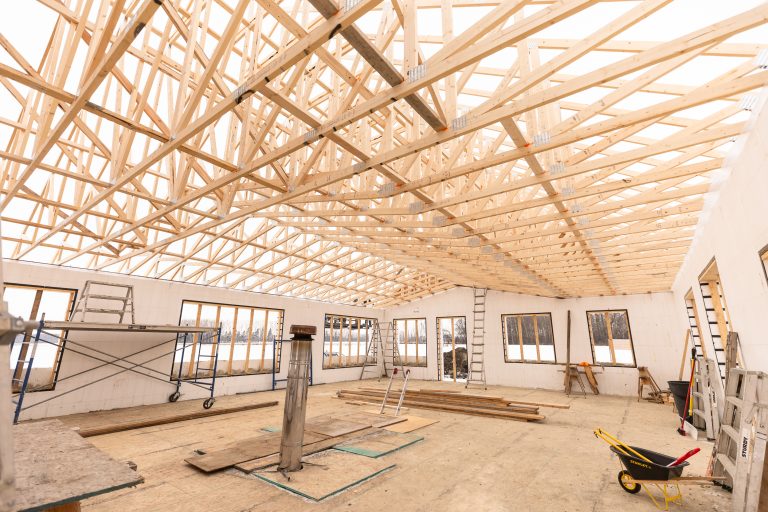
ICF walls complete with roof trusses in place.
A standard top plate connection tied the truss system back to the ICF walls while maintaining enclosure continuity.
Were any special detailing considerations required beyond a typical ICF build?
The main focus was on connections.
For Passive House, you need to be very intentional about how everything ties together—roof-to-wall connections, floor-to-wall connections, and continuity of the air barrier.
That said, most of what we did is already common practice in the ICF industry. We used products like Simpson Strong-Tie connectors to attach floor systems to the ICF walls. We used a top plate to mount trusses, which is standard practice.
The critical part was making sure the ceiling air barrier connected cleanly and continuously back to the ICF core. That continuity is what maintains airtightness.
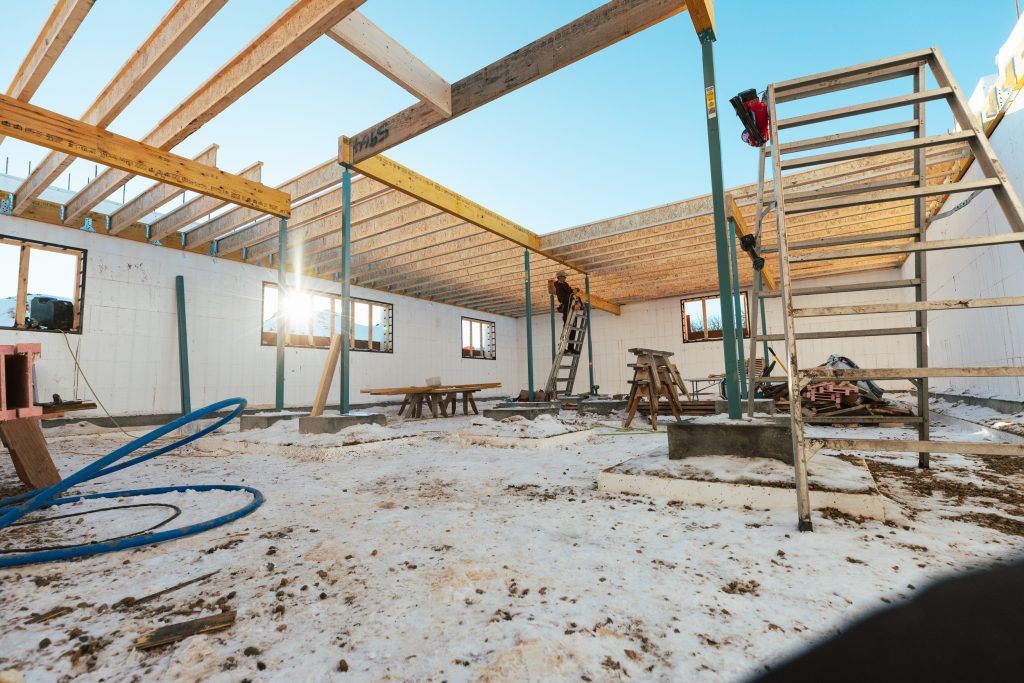
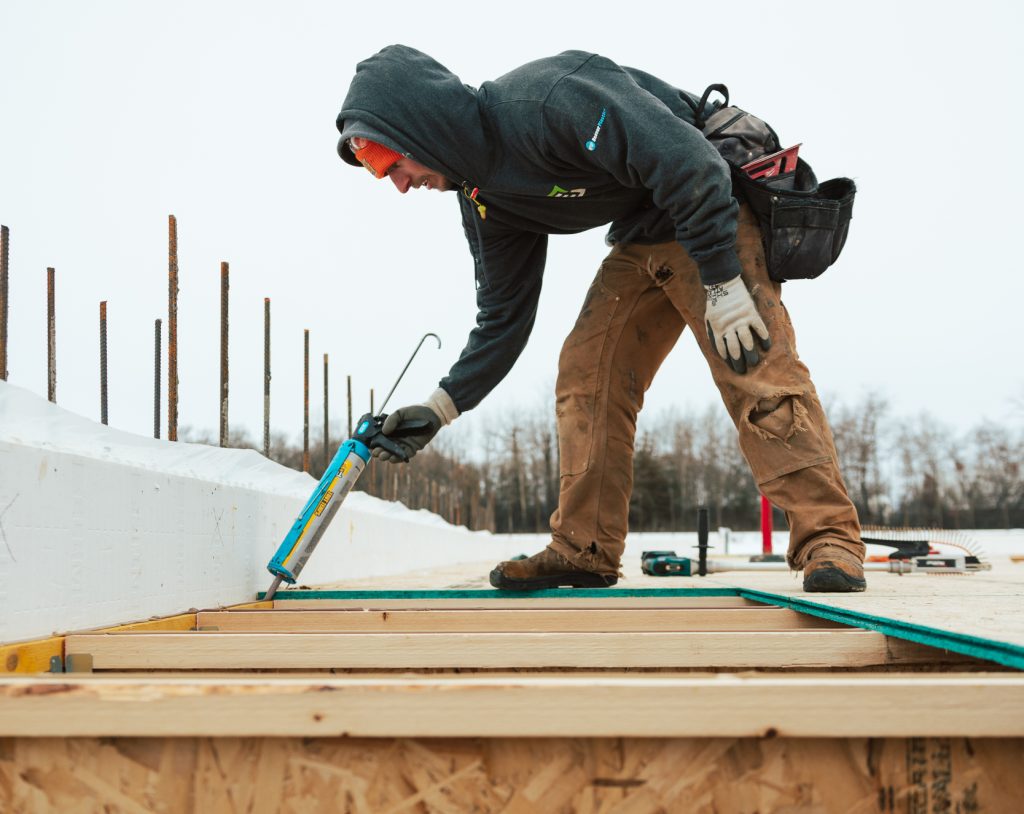
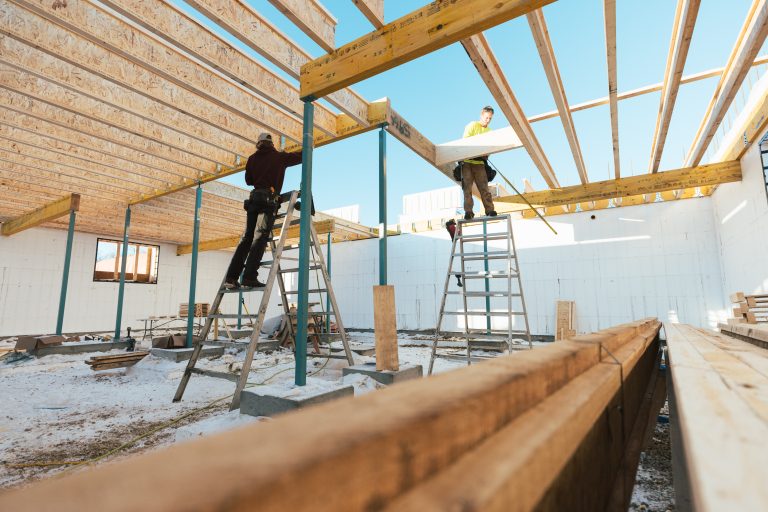
Floor system tied into the ICF walls. Simpson Strong-Tie connectors were used to attach the floor assembly while maintaining structural continuity.
What was your role as a builder during the design phase?
Because I was familiar with ICF, I was involved early and deeply in the design details.
From the beginning, I had a role in decisions around windows, doors, wall assemblies, and floor-to-wall connections. Having built with ICF before meant we could brainstorm practical solutions instead of reinventing details.
We’d already dealt with many of these connection points on previous projects. That experience helped us approach them through a Passive House lens without overcomplicating the build.
Familiarity with ICF allowed design decisions around windows, walls, and connections to be addressed early—streamlining performance without overcomplicating the build.
Don't miss a thing
Sign up to receive the latest info on new Element ICF products, special offers and more.
Wrapping Up
This project wasn’t about proving that ICF can work in a Passive House—it was about understanding how it actually performs when real design constraints, climate conditions, and construction details are applied.
From early design decisions to connection detailing, ICF proved to be a practical foundation for a high-performance enclosure—while still requiring thoughtful integration with additional insulation, airtightness strategies, and modeling-driven choices. Familiarity with the system played a critical role, allowing performance goals to be addressed through execution rather than theory.
As with any Passive House project, success came down to understanding the details early, coordinating across assemblies, and ensuring continuity from one system to the next.
About the High-Performance Builder
Dennis Borren Borren Builders | Central Alberta
Dennis specializes in high-performance ICF construction — building stronger, more energy-efficient homes and foundations across Central Alberta.
If you have questions about this article or are looking to collaborate, Dennis would be happy to engage with you:
In the next article, Dennis moves below grade to examine how the foundation was designed to support Passive House performance from the ground up.
No theory. Just real decisions, real challenges, and real solutions—starting at the footing.
This series documents one builder’s experience using our products on a specific project. Construction methods vary, and the details shown here should not be interpreted as a universal recommendation or endorsement.
Whether you’re an experienced ICF installer or considering ICF for the first time, we can help. Simply complete this short form for a free quote (or to ask any question at all!).
Ask Anything is a virtual assistant, which utilizes artificial intelligence to answer questions relating to Element ICF (the “Services”). The Services were developed by Logix Brands Ltd. (“Logix”) in conjunction with existing Element ICF product information. You may provide input to the Services and receive output (the “Output”) from the Services based on your input. Due to the nature of the Services and artificial intelligence generally, the Output may not always be accurate. You should not rely on the Output from the Services as factual information or as a substitute for advice. If you require further information regarding the Output and/or Element ICF, please contact a Territory Manager or local Element ICF dealer. Logix, nor any of its affiliates or licensors will be liable for any direct, incidental, consequently or indirect damages (including lost profits) arising out of the use of the Services or adhering to the Output.
Building Soon?
We can help make your ICF dreams a reality! Please let us know how we can help or assist.
Please complete this form to this dealer a question or to request a quote on Element ICF products. If you would like a quote please upload your plan set (if available) and provide as much additional information as possible.
For unlimited access to all of our technical and marketing resources, please enter your information. We will also email you a copy of each of the items you select for quick future reference.