At A Glance
- How the ICF concrete core serves as a continuous air control layer
- Why 12 inches of EPS insulation were installed beneath the footings
- How cold joints were managed to maintain airtightness
- Lessons learned pouring ICF through Alberta winter conditions
- How radon mitigation was detailed to reduce air barrier penetrations
Passive House performance doesn’t begin at the windows.
It begins at the foundation.
Before airtight drywall details.
Before blower door testing.
Before finishes.
The foundation sets the performance standard for everything above it.
In Central Alberta, where freeze-thaw cycles and winter construction are part of the reality, the foundation has to do more than support structural loads. It must control air movement, limit thermal transfer, and integrate seamlessly with the wall assembly above.
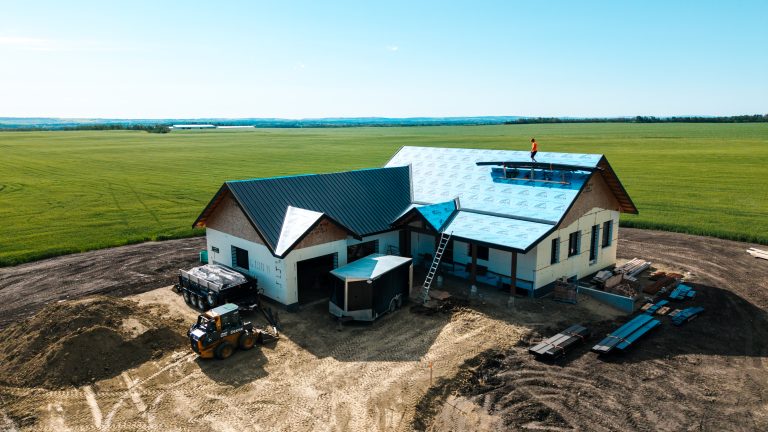
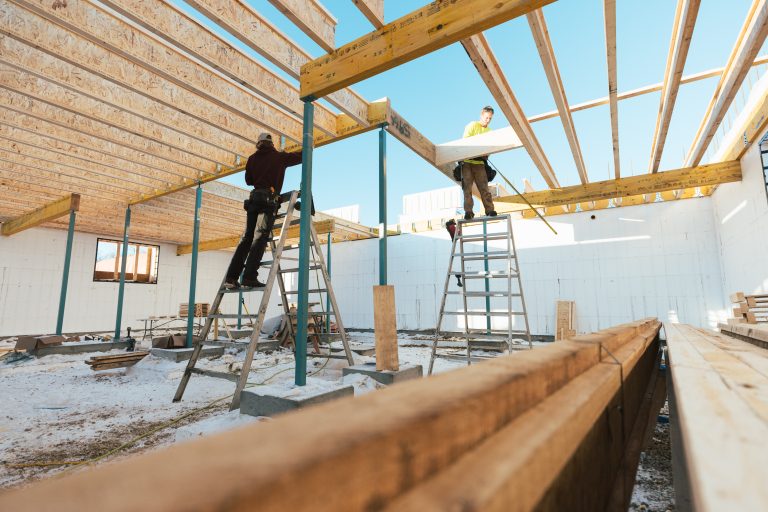
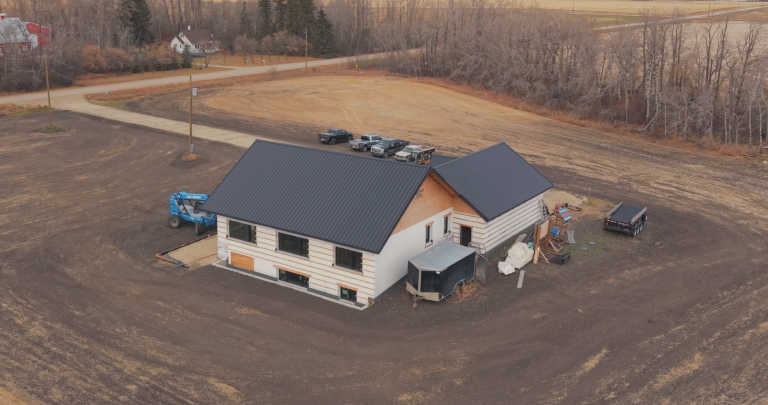
In this second installment of our 6-part in-depth video and blog series, Dennis Borren explains how this Passive House foundation was designed and executed using ICF—starting at the footing and building upward.
You can continue reading below, or watch this 4-minute interview segment to hear Dennis discuss this phase of the project in his own words.
What material serves as the air control layer in the foundation, and how is it connected to the air control layer in the above-grade wall assembly?
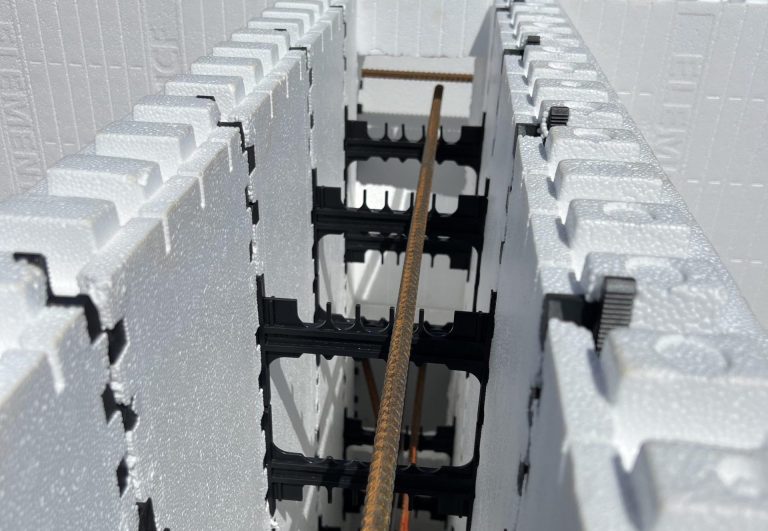
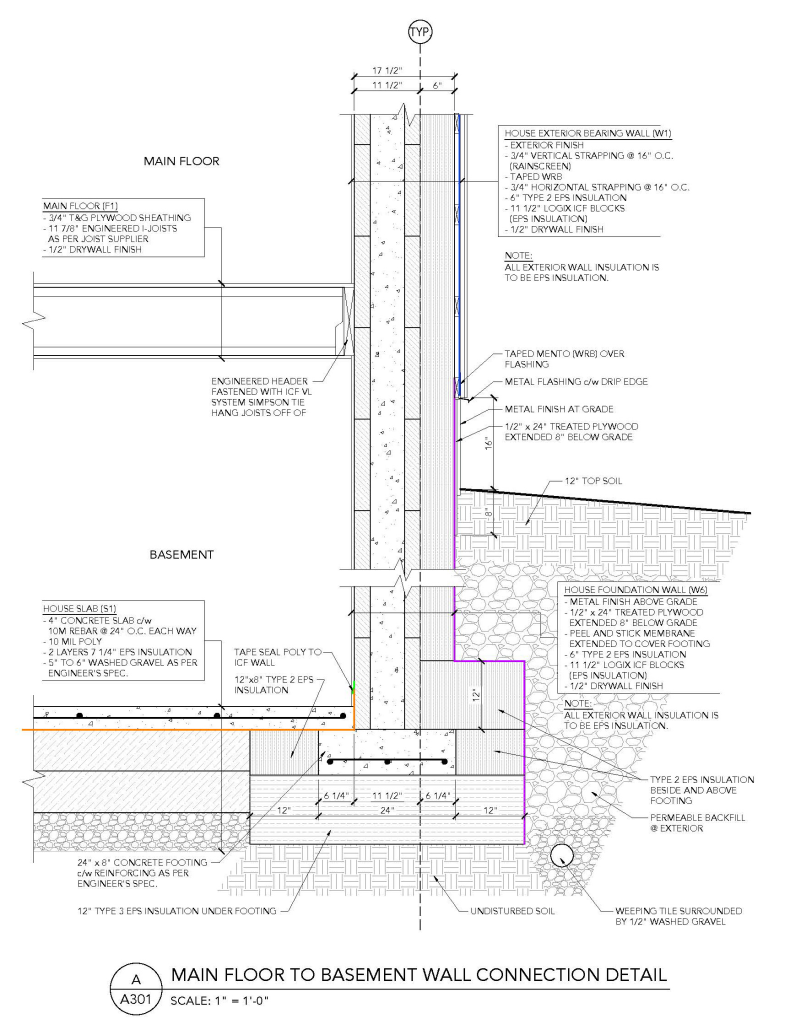
For this home, the air control layer is the concrete core inside the ICF block.
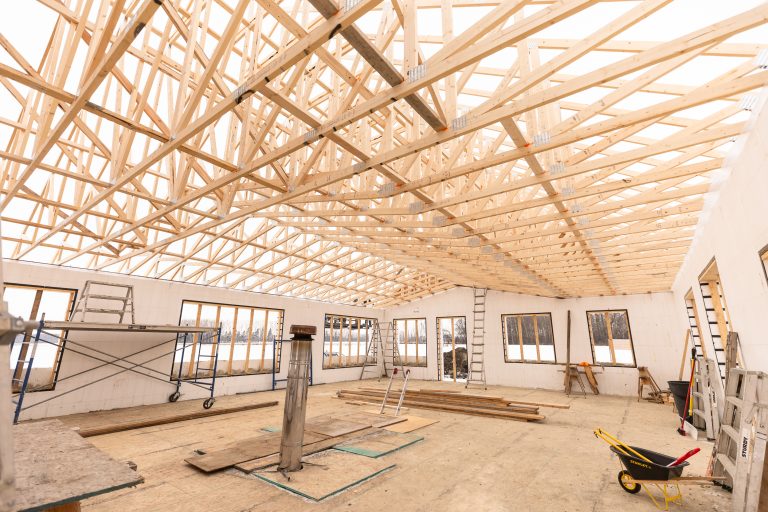
Rather than introducing a separate membrane below grade, the solid concrete within the ICF assembly functions as the primary air barrier. Because the project used ICF from the foundation all the way to the trusses, that same concrete core continues vertically through the above-grade wall assembly.
There’s no transition from one air barrier material to another at grade.
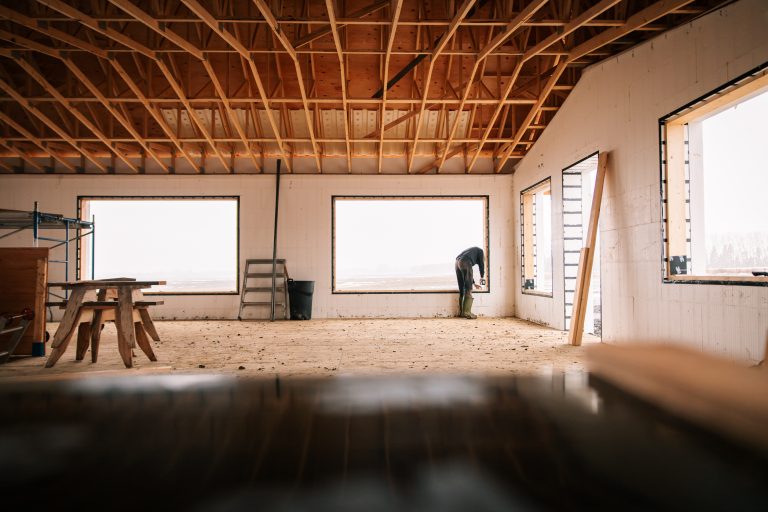
The foundation walls connect directly to the main-floor ICF walls, and from there the concrete core ties into the ceiling air barrier. The result is one continuous air control layer running from the footing to the roofline.
That continuity simplifies one of the most demanding aspects of Passive House construction: maintaining an uninterrupted air barrier across every transition.
What challenges arose during the transition from the below-grade to above-grade air barrier?
The primary challenge was managing the cold joint created between concrete pours.
ICF walls are poured in lifts. A lower section cures, and then the next lift is poured later—often at floor height. Where those two pours meet, a cold joint forms.
In a Passive House project, that joint requires careful attention. Proper vibration and consolidation during the second pour are essential to ensure strong bonding and eliminate voids that could allow air movement.
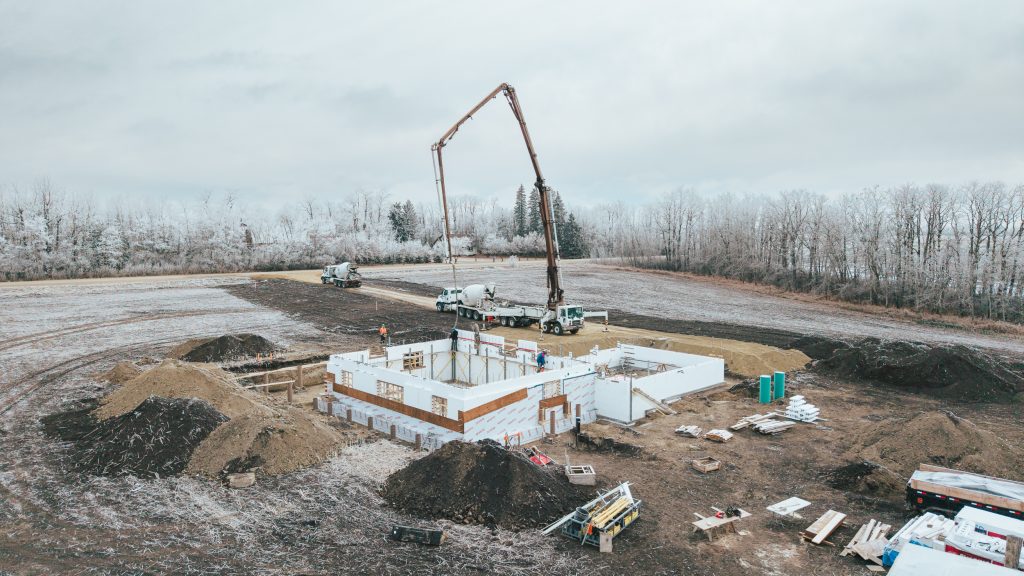
Winter conditions introduced additional complexity. Temperature swings caused snow to melt and refreeze inside the forms. In some areas, up to two inches of ice formed at the top of the cured wall—exactly where the next lift needed to bond.
Before placing the next pour, heaters were used to melt and remove that ice. Without that step, gaps could have formed once the ice melted—compromising both structural continuity and airtightness.
Execution at the joint was critical to protecting performance.
A simple method for cleaning the interlock if debris or snow does gather, is to blast it off with compressed air.
Were any membranes or insulation measures required at the footing connection?
Yes—specifically for thermal performance.
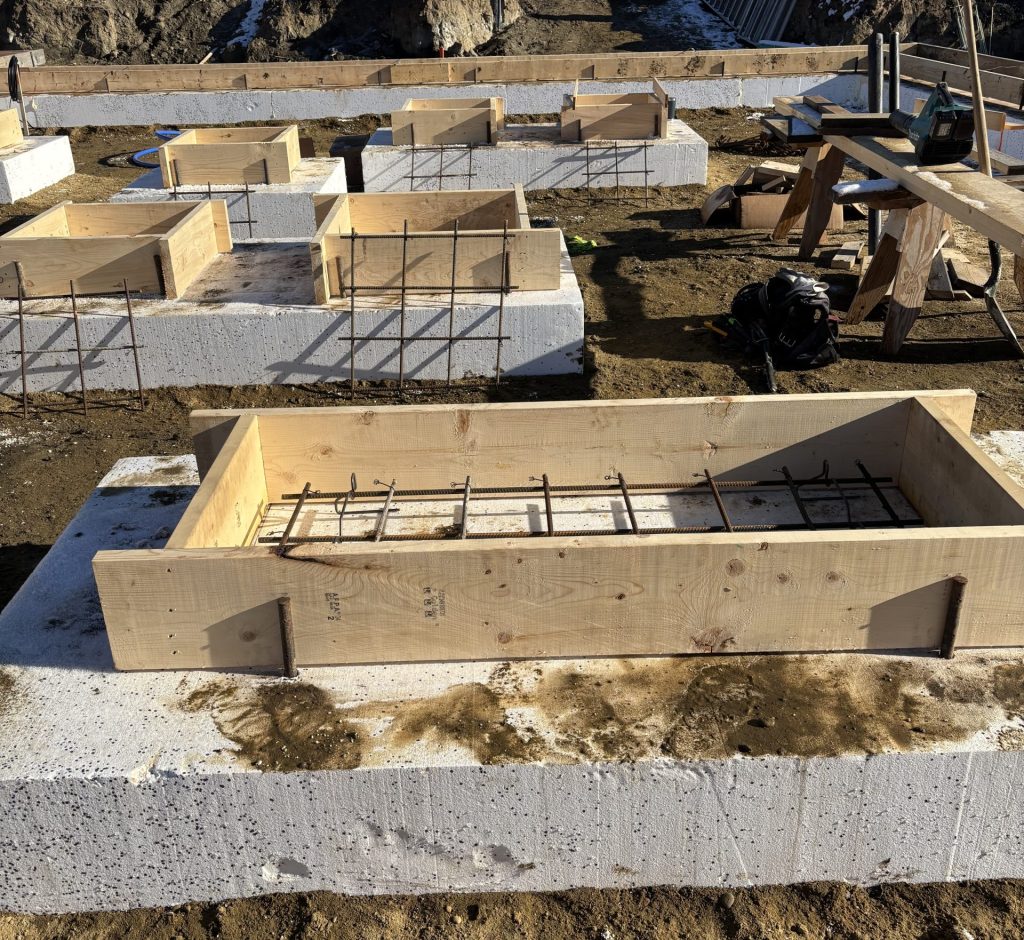
To meet Passive House targets, the footings were installed over 12 inches of EPS insulation. This required excavating an additional 12 inches below standard footing depth to accommodate the foam beneath the concrete.
Type III EPS was selected for its higher compressive strength and bearing capacity. While local building code would have permitted Type II EPS, the higher-rated material provided additional confidence under load.
This insulation layer creates a thermal break between the foundation and the surrounding soil. The structure remains fully supported, but thermally isolated from exterior ground conditions.
No separate membrane was introduced to create the air barrier at the footing. The concrete core remains the primary air control layer.
Exact thermal performance values vary by EPS product and climate conditions.
Is a radon mitigation system being implemented? If so, can you describe the components and function?
Yes. Radon mitigation is required under Alberta building code.
The system includes:
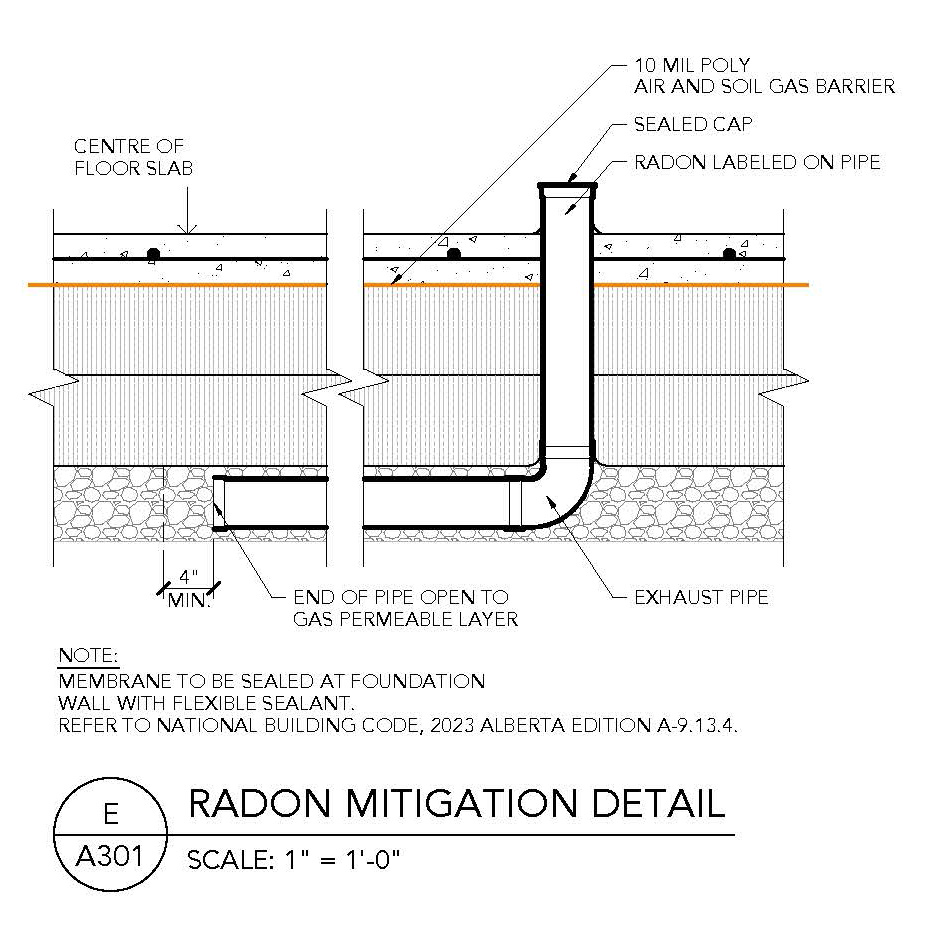
- Washed rock installed beneath the basement slab
- A collection pipe embedded within that rock layer
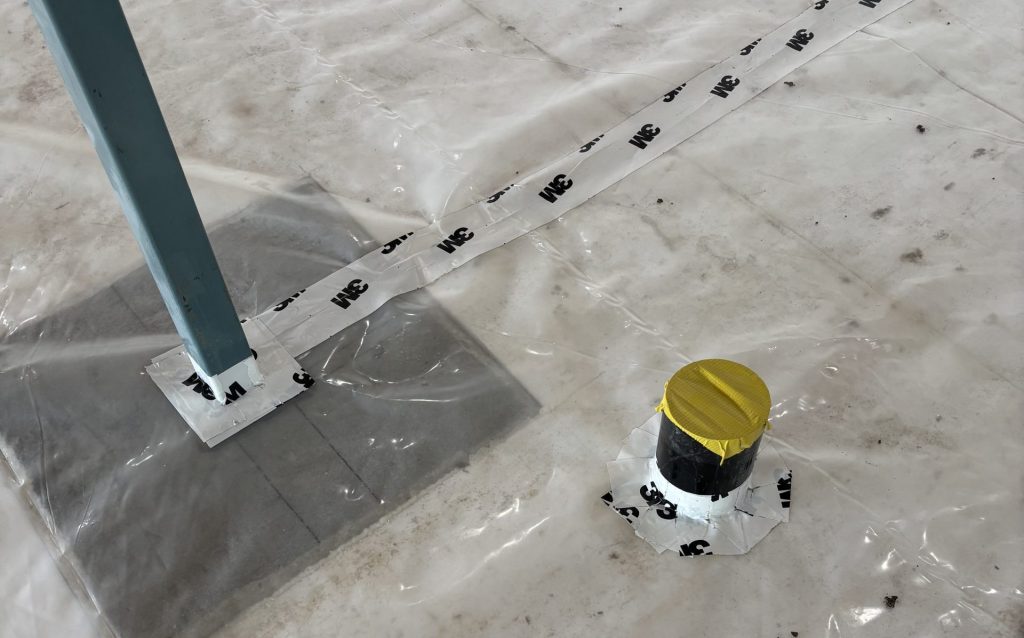
- A vapor or air barrier installed above
- A vent pipe routed to a location where a mitigation fan can be added if required
The key design decision on this project was routing the vent pipe to the garage instead of into the mechanical room inside the building envelope.
This reduced one penetration through the basement slab air barrier, helping maintain airtightness. If mitigation becomes necessary, a blower can be installed in the garage without compromising the interior air control layer.
It’s a small adjustment—but in high-performance construction, small details protect big outcomes.
Don't miss a thing
Sign up to receive the latest info on new Element ICF products, special offers and more.
Wrapping Up
A Passive House foundation does more than hold weight.
On this project, it:
- Serves as the primary air control layer
- Maintains vertical continuity from footing to trusses
- Manages cold joints through careful execution
- Creates a thermal break with under-footing EPS
- Integrates radon mitigation without compromising airtightness
Performance doesn’t begin above grade.
It begins at the ground—with decisions that support airtightness, thermal control, and durability from day one.
About the High-Performance Builder
Dennis Borren
Borren Builders | Central Alberta
Dennis specializes in high-performance ICF construction — building stronger, more energy-efficient homes and foundations across Central Alberta.
If you have questions about this article or are looking to collaborate, Dennis would be happy to engage with you:
Up Next in the Series:
Passive House Meets ICF — Part 3: Above-Grade Walls and Floor Connections
In the next article, Dennis moves above grade to examine how the ICF wall assembly performs once it leaves the foundation. Because once the foundation is right, every above-grade connection must carry that performance forward.
This series documents one builder’s experience using our products on a specific project. Construction methods vary, and the details shown here should not be interpreted as a universal recommendation or endorsement.