How attached structures can introduce thermal bridges
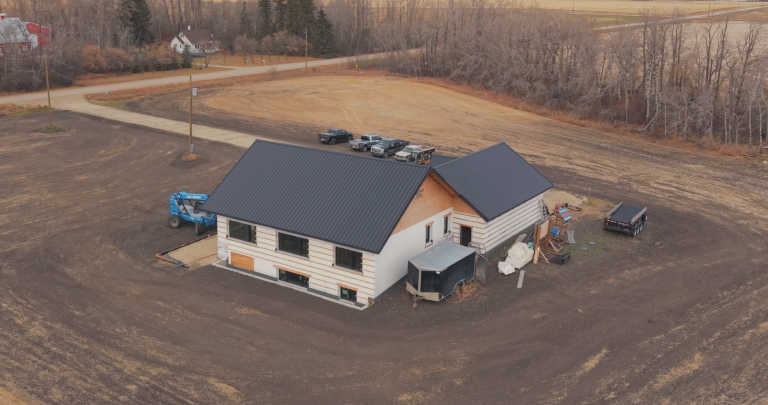
Why the garage was structurally separated from the Passive House envelope
Window and door installation strategies for airtightness
How ProBuck and insulation layers help reduce thermal bridging
Detailing methods used to maintain a continuous weather barrier
In Passive House construction, windows, doors, and structural connections can easily become weak points in the building envelope.
Any break in insulation or continuity of the air and weather barriers can allow heat loss, moisture intrusion, or unwanted air movement. Because of this, these transitions require careful planning and detailing.
In this phase of the project, Dennis Borren explains how windows, doors, and adjacent structures—like the attached garage—were detailed to reduce thermal bridging and maintain Passive House performance.
You can continue reading below, or watch the interview segment to hear Dennis walk through these details in his own words.
Were any special detailing considerations required for openings beyond a regular ICF build?
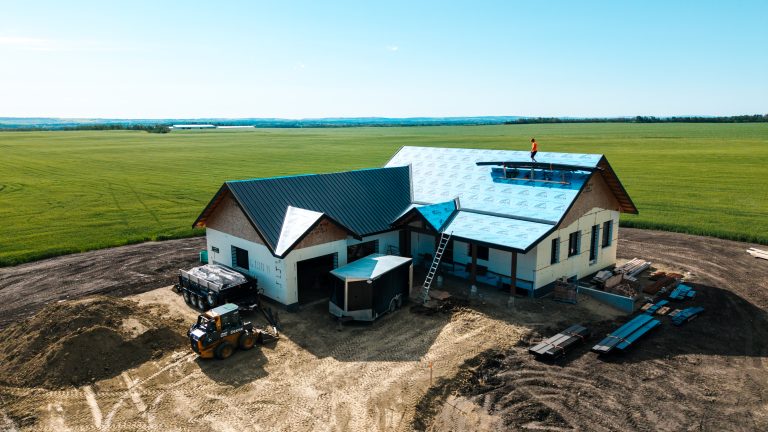
Yes — one of the key detailing challenges involved how the attached garage connects to the Passive House envelope.
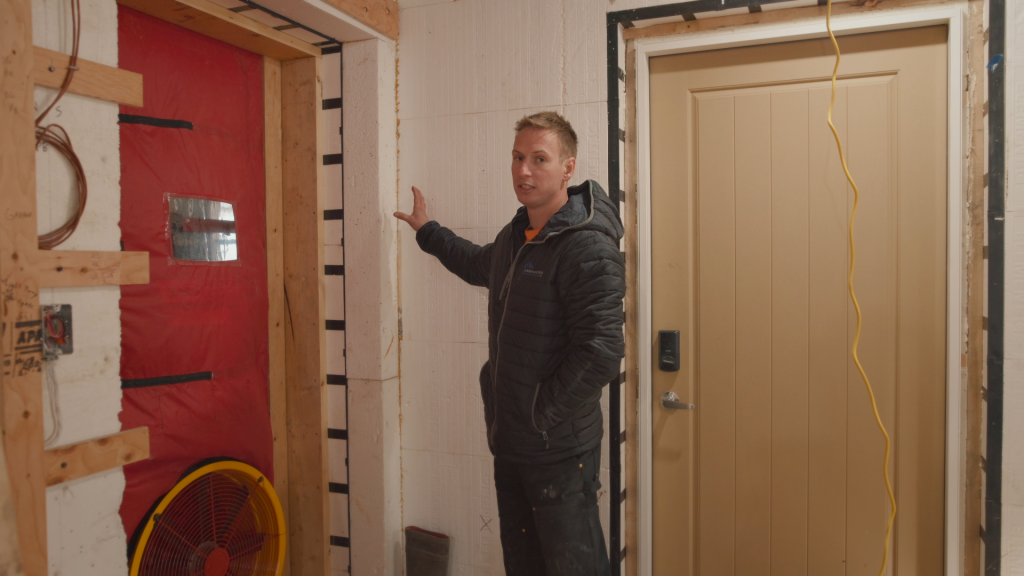
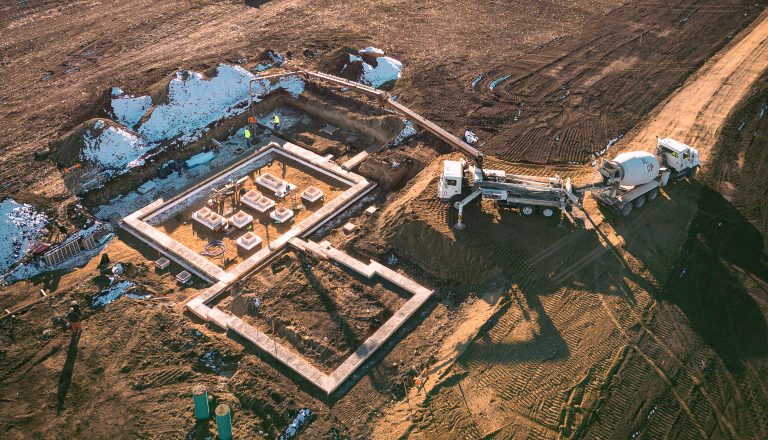
In this project, the garage is visually attached to the home, but it is not structurally connected directly to the ICF wall system. Instead, the primary ICF wall stops at the door opening formed with Logix ProBuck, which defines the edge of the Passive House envelope.
Beyond that point, an additional six inches of EPS insulation was installed on the exterior of the wall. This continuous insulation layer wraps the outer envelope of the building and helps prevent thermal bridging between the conditioned home and the garage structure.
The garage wall is then tied back to the main structure beyond this insulation layer, rather than directly to the ICF wall itself. The only physical connection between the garage and the house is a series of fiberglass reinforcement rods, which provide structural stability while minimizing heat transfer.
This approach allows the garage to remain adjacent to the home while preserving the continuous insulation and thermal performance required for Passive House construction.
To prevent thermal bridging, the garage structure is connected beyond the continuous insulation layer rather than directly to the ICF wall.
How were window and door openings detailed to ensure water drains to the exterior?
Windows and doors are common entry points for moisture in any building enclosure, so careful flashing and drainage detailing were essential.
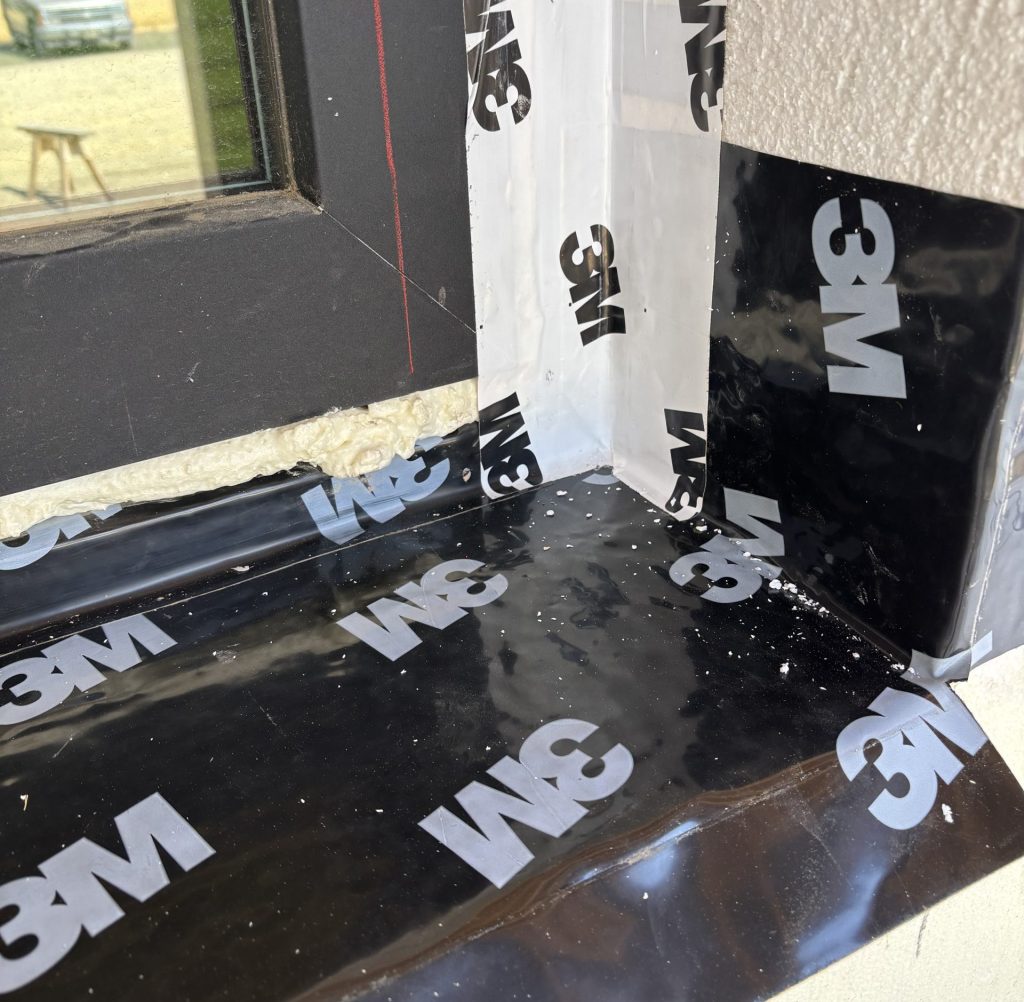
In this project, the openings were flashed using high-performance tapes and membranes, including products from 3M. These tapes were used to seal the window openings and connect them to the weather-resistive barrier (WRB) on the exterior wall.
The goal of this detailing is to create a continuous water-shedding layer. If any moisture reaches the opening, the flashing and WRB direct that water safely outward rather than allowing it to enter the wall assembly.
Proper installation sequencing is critical for this approach to work. Each layer—from the WRB to the flashing tapes and window components—must overlap correctly so water always drains to the exterior.
High-performance tape seals the window opening and ties it into the WRB, creating a continuous water-shedding layer that directs moisture safely to the exterior.
With ProBuck, insulation, flashing, and air sealing working together, the assembly connects back to the ICF wall while maintaining airtightness and thermal performance.
How are the windows connected to the air control layer within the wall assembly?
In this project, the concrete core of the ICF wall serves as the primary air control layer.
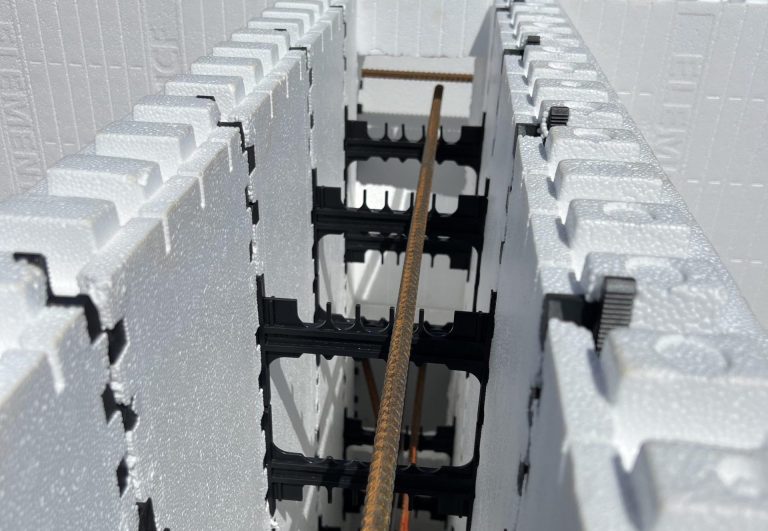
To tie the windows into that air barrier, the openings were first formed using Element ProBuck, which creates a durable and precise frame within the ICF wall.
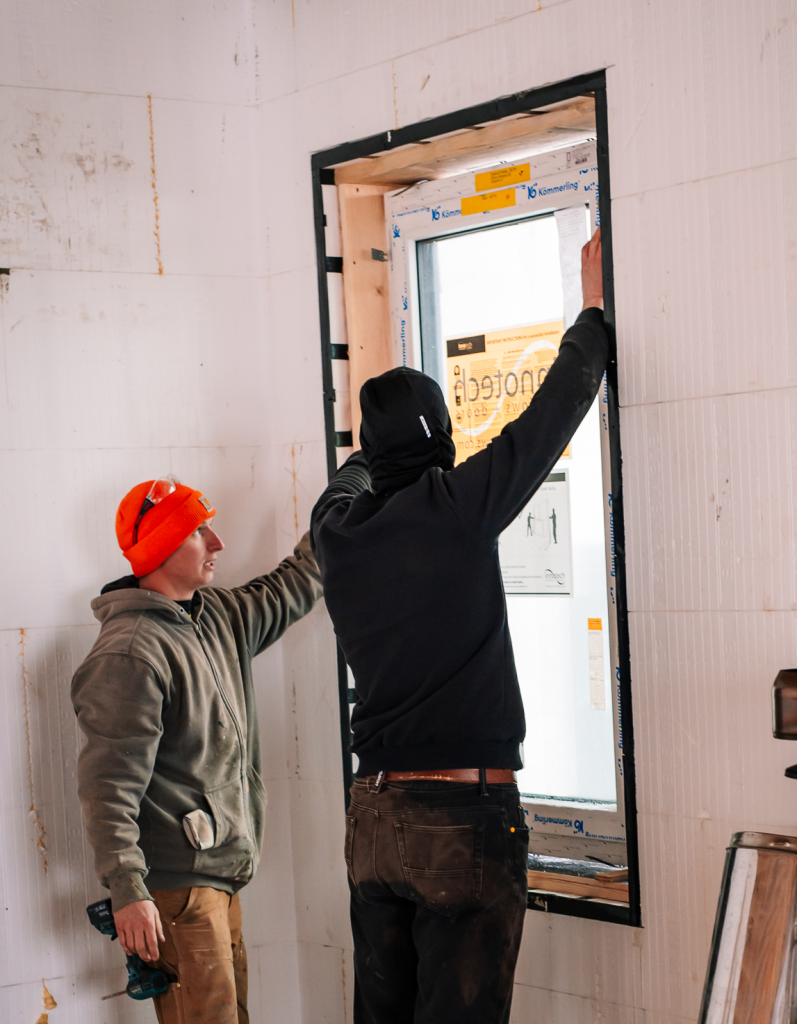
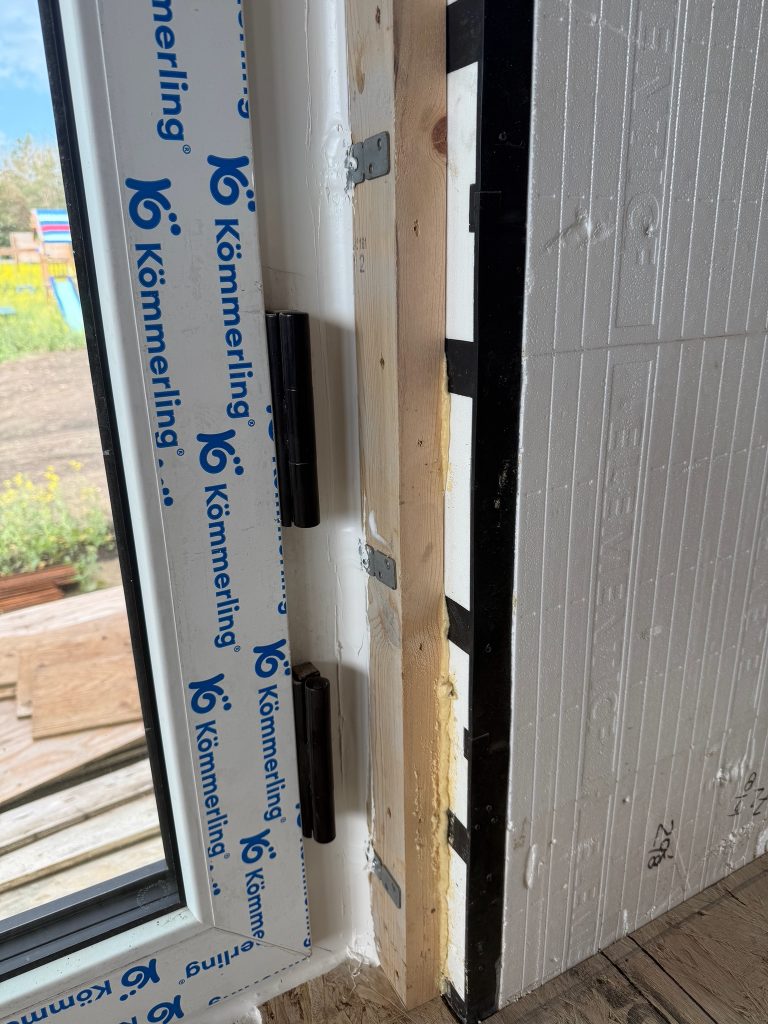
After the concrete walls were poured, a wood subframe was installed inside the ProBuck opening. This wood frame provides a clean mounting surface for the windows.
The wood frame was then sealed to the ProBuck using high-performance tape and spray foam, helping connect the window installation back to the wall’s air control layer.
Once the windows were installed, the joint between the window frame and the wood subframe was sealed using backer rod and industrial-grade sealant. This combination of materials helps maintain airtightness while still allowing some flexibility at the joint.
After the ICF wall was poured, a wood subframe was installed inside the ProBuck to create a precise mounting surface. The window is then positioned within this frame and sealed using tape and spray foam to connect the assembly back to the wall’s air control layer.
nterior profile of the window installation showing the connection between the window frame and wood subframe. Backer rod and sealant complete the air seal at the interior joint.
Thermal bridging can occur at the window-to-wall connection. How was this minimized?
Thermal bridging around openings was addressed primarily through additional insulation and careful placement of the windows within the wall assembly.
The project used ProBuck window bucks, which create a consistent interface between the concrete wall and the window frame.
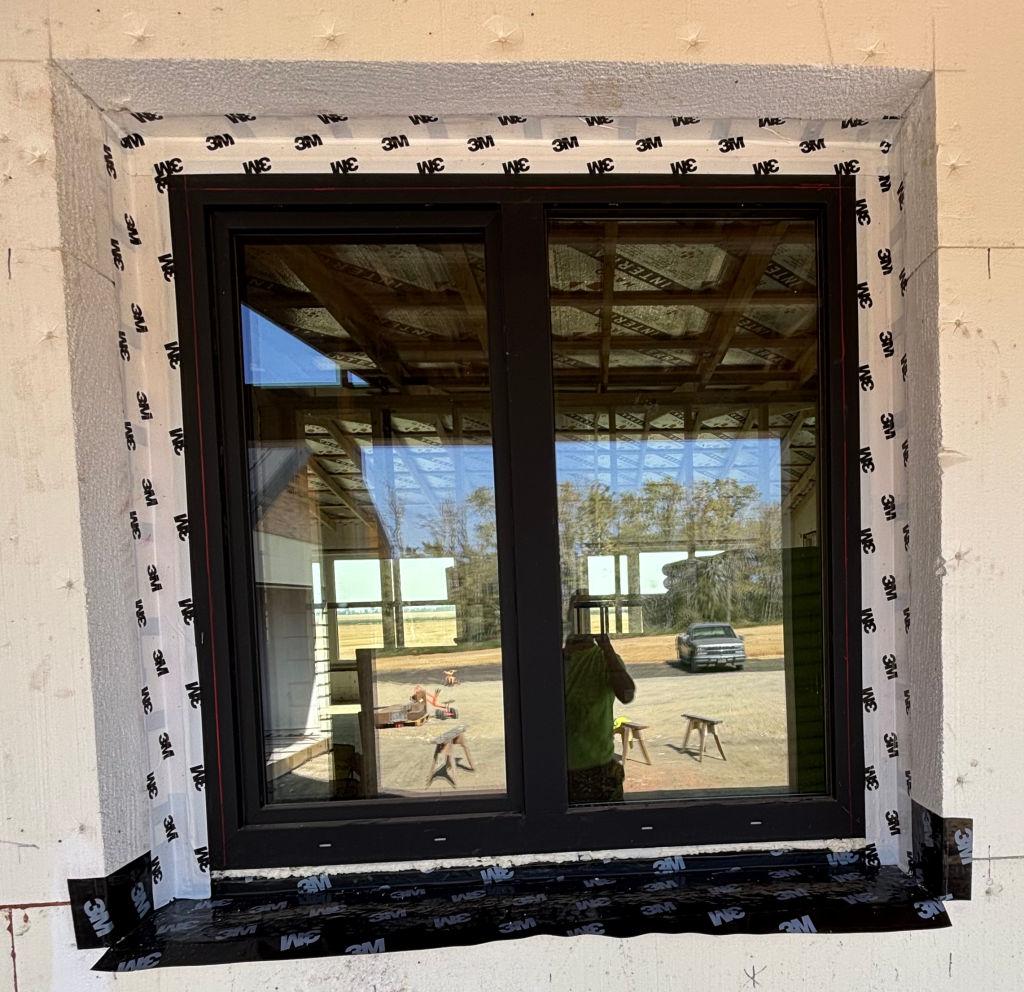
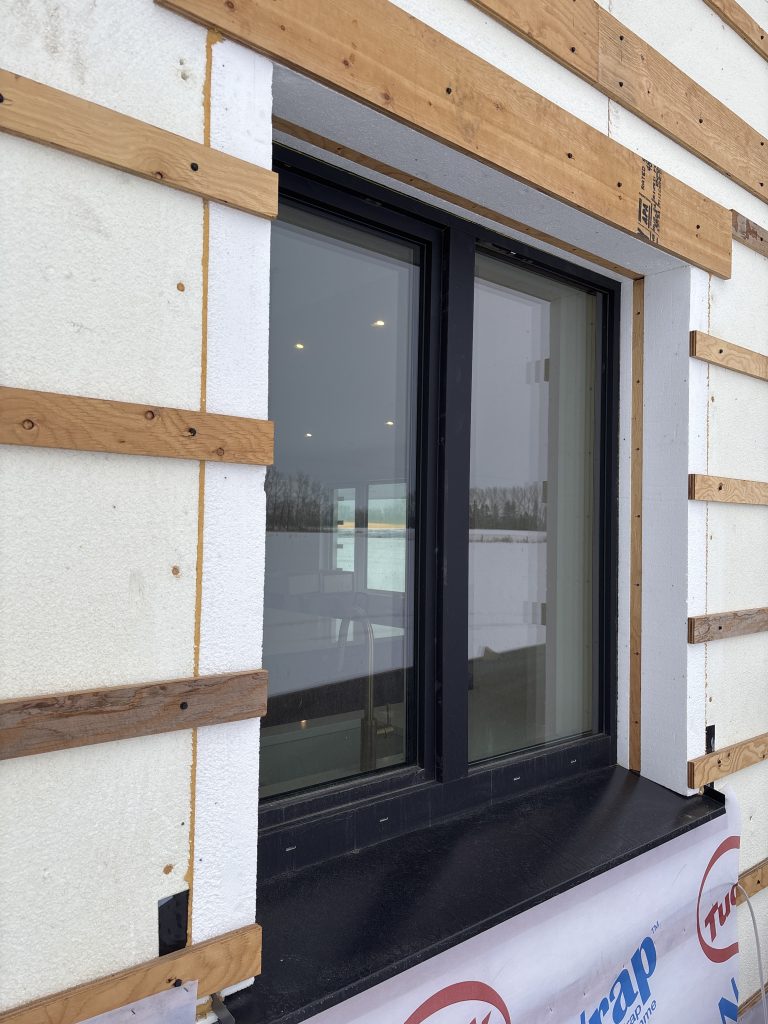
Beyond that, the openings were intentionally over-insulated. Extra EPS insulation was installed around the window openings on both the interior and exterior sides of the wall.
This helps maintain continuity with the exterior insulation layer of the building and reduces heat loss at the window-to-wall transition.
By wrapping the window frame with insulation wherever possible, the design minimizes localized cold spots that can occur around window openings.
Window opening showing layered insulation around the ProBuck buck. Additional EPS insulation helps maintain continuous thermal protection and reduce heat loss at the window-to-wall transition.
Were Passive House–certified or high-performance windows and doors used?
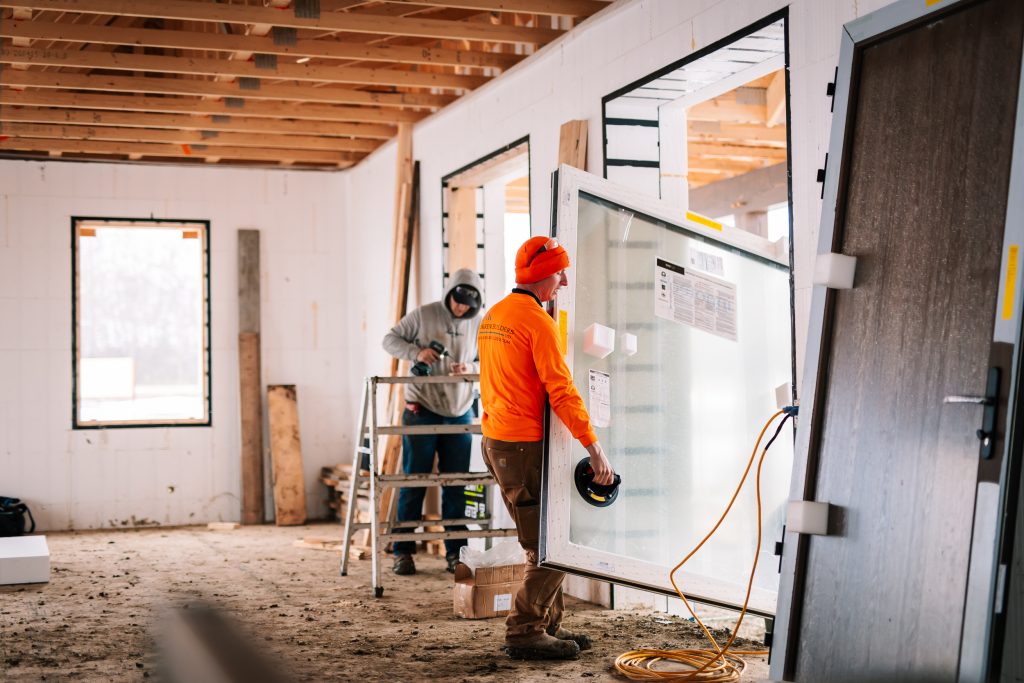
Yes. The project used Innotech Windows and Doors – 88 Pro Series, which are Passive House–certified windows designed for cold climates.
Even with high-performance windows, additional detailing was required due to the climate in Central Alberta. The installation strategy included extra insulation around the frames and careful air-sealing to ensure the window assemblies performed as part of the overall Passive House enclosure.
This combination of certified windows, precise installation, and insulation continuity helped maintain the performance targets required for the project.
Passive House–certified windows and doors installed within the ICF wall assembly, with insulation and air-sealing details designed to maintain the performance of the enclosure.
Wrapping Up
Windows, doors, and structural connections are some of the most technically demanding parts of a Passive House project.
Each opening must be carefully integrated with the air barrier, insulation layer, and weather-resistive barrier to maintain overall building performance.
In this project, strategies such as thermal separation of the garage, careful flashing of openings, insulated window installations, and high-performance Passive House windows all contributed to maintaining a continuous, high-performance enclosure.
As Dennis demonstrates throughout this series, achieving Passive House performance isn’t about any single product—it’s about how every detail works together.
About the High-Performance Builder
Dennis Borren Borren Builders | Central Alberta
Dennis specializes in high-performance ICF construction — building stronger, more energy-efficient homes and foundations across Central Alberta.
If you have questions about this article or are looking to collaborate, Dennis would be happy to engage with you:
Part 5: Roof Assemblies and Air Barrier Continuity
Next, Dennis explores how roof assemblies connect to ICF walls while maintaining a continuous air barrier — one of the most critical details in Passive House construction.
This series documents one builder’s experience using our products on a specific project. Construction methods vary, and the details shown here should not be interpreted as a universal recommendation or endorsement.
Whether you’re an experienced ICF installer or considering ICF for the first time, we can help. Simply complete this short form for a free quote (or to ask any question at all!).
Ask Anything is a virtual assistant, which utilizes artificial intelligence to answer questions relating to Element ICF (the “Services”). The Services were developed by Logix Brands Ltd. (“Logix”) in conjunction with existing Element ICF product information. You may provide input to the Services and receive output (the “Output”) from the Services based on your input. Due to the nature of the Services and artificial intelligence generally, the Output may not always be accurate. You should not rely on the Output from the Services as factual information or as a substitute for advice. If you require further information regarding the Output and/or Element ICF, please contact a Territory Manager or local Element ICF dealer. Logix, nor any of its affiliates or licensors will be liable for any direct, incidental, consequently or indirect damages (including lost profits) arising out of the use of the Services or adhering to the Output.
Building Soon?
We can help make your ICF dreams a reality! Please let us know how we can help or assist.
Please complete this form to this dealer a question or to request a quote on Element ICF products. If you would like a quote please upload your plan set (if available) and provide as much additional information as possible.
For unlimited access to all of our technical and marketing resources, please enter your information. We will also email you a copy of each of the items you select for quick future reference.