At A Glance
- Achieved 0.4 ACH before final sealing
- Modeling challenges using ICF in Passive House software
- Field execution lessons from foundation to roof
- Real-world solutions developed during winter construction
In Passive House construction, performance is not assumed.
It is measured.
After design, planning, and execution, the final phase of the project focuses on testing, problem-solving, and understanding how the building performs under real conditions.
In this final installment of the series, Dennis Borren reflects on blower door results, construction challenges, and the lessons learned building a Passive House using ICF.
You can continue reading below, or watch the interview segment to hear Dennis walk through these insights in his own words.
Did the project meet its airtightness goals during initial blower door testing?
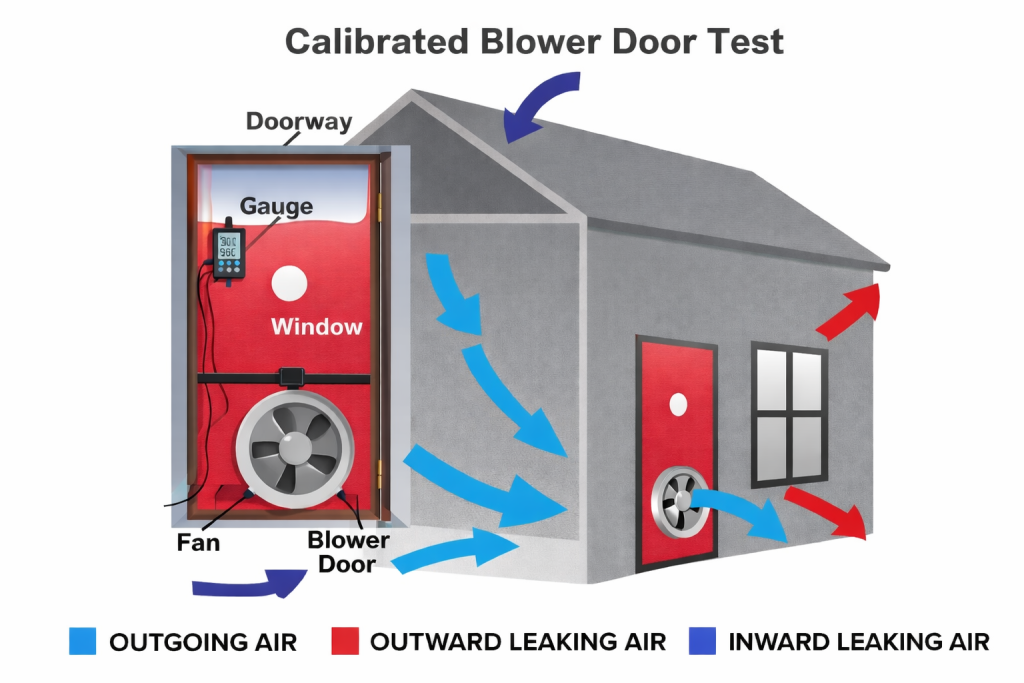
A preliminary blower door test was completed to evaluate progress and identify any areas that required attention before final sealing.
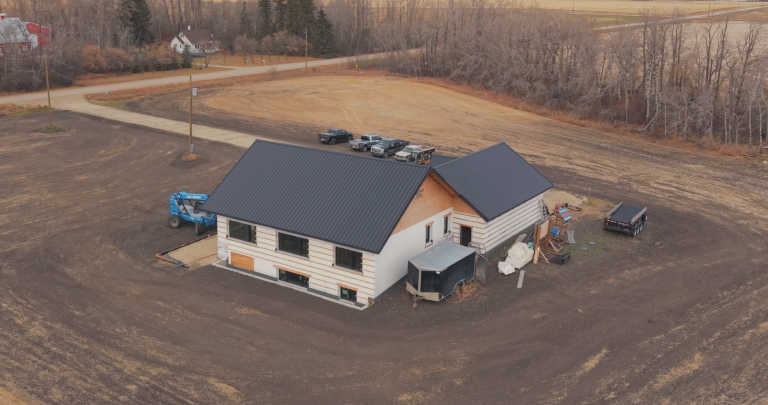
At that stage—before all back sealing had been completed—the project reached 0.4 air changes per hour. This confirmed that the approach to airtightness was performing as intended.
The project met its airtightness target during the initial test.
What was the biggest construction challenge in combining ICF with Passive House standards?
The primary challenge was not construction—it was modeling.
Because Element ICF is not a certified Passive House product, additional information had to be provided and entered into the software to accurately represent its performance.
This required gathering detailed background data and inputting it into the Passive House model so the system could be properly evaluated within the design.
What details were the hardest to execute accurately in the field?
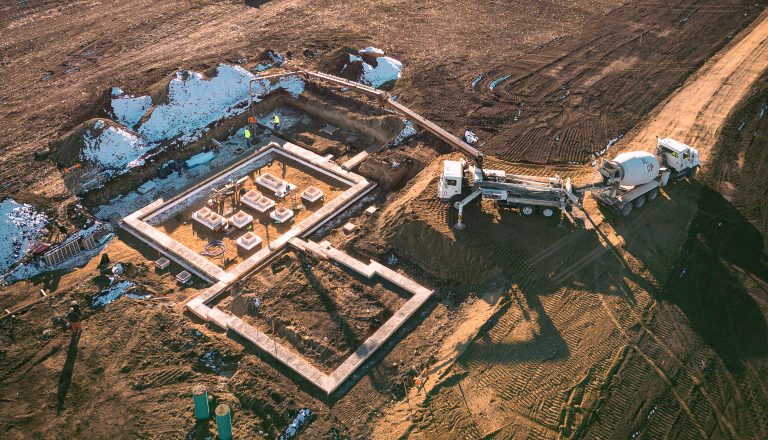
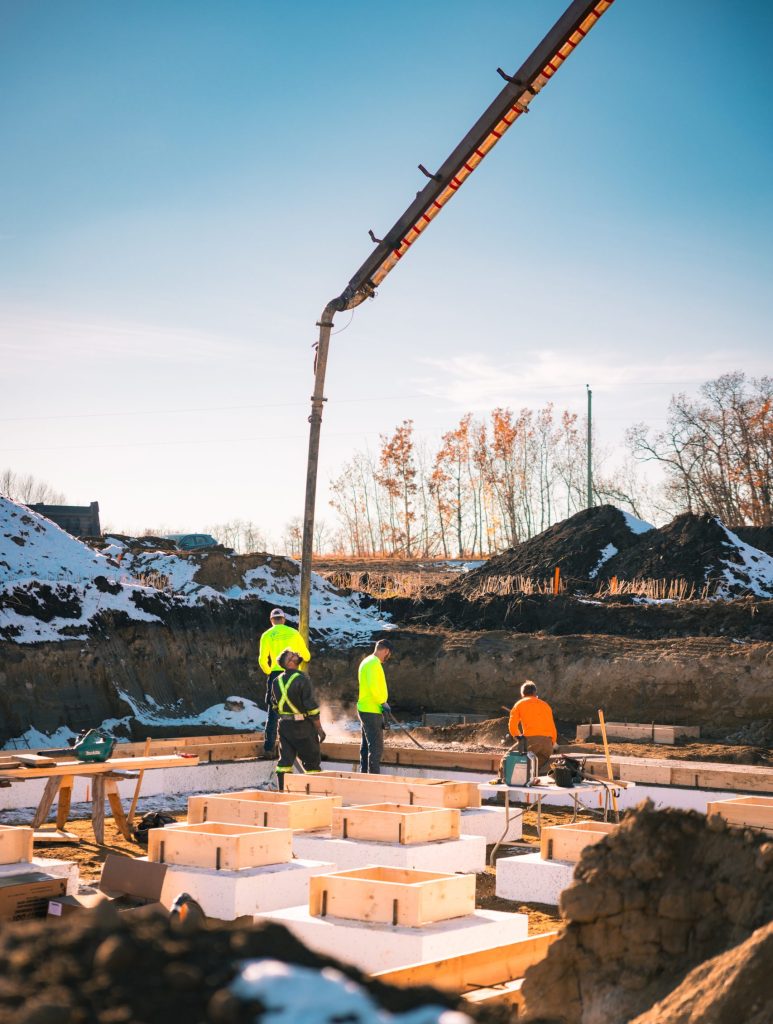
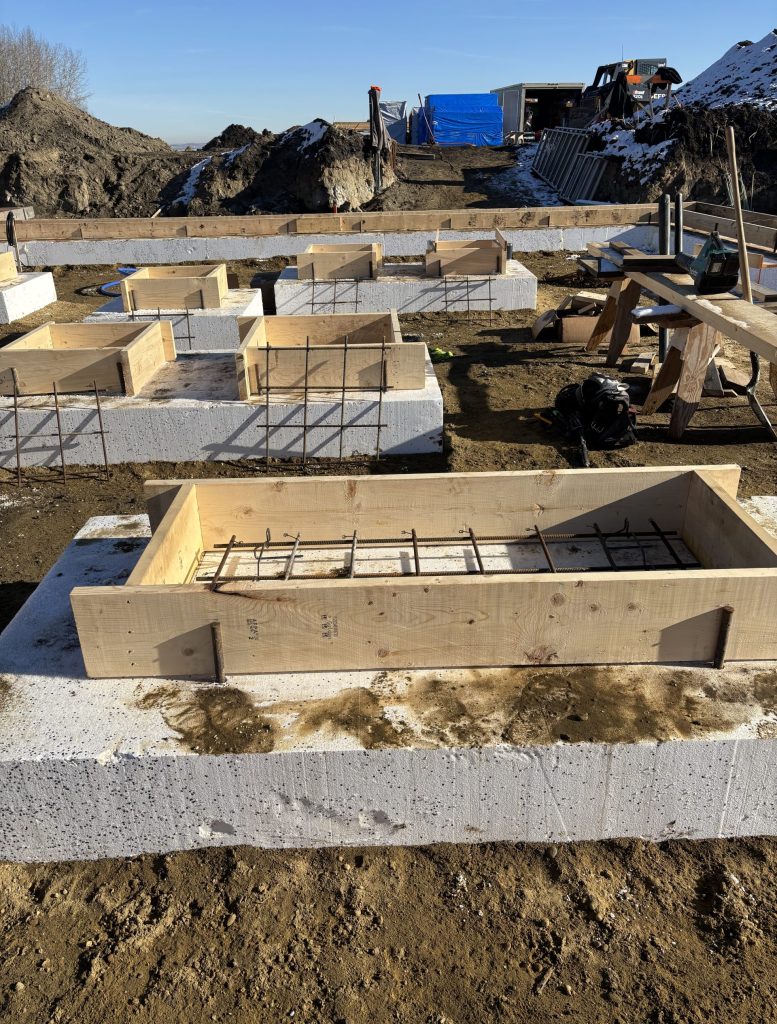
One of the more difficult details was installing rigid foam beneath the foundation.
Unlike concrete, which can conform to minor variations in the substrate, rigid foam requires a consistently level base. Any irregularities in the ground surface could result in uneven support.
To address this, the site was carefully leveled before installation. Sand was used to fill small dips, and the entire base was compacted thoroughly to ensure full contact beneath the foam. This preparation helped prevent settlement or movement once the concrete was placed.
What unexpected solutions had to be developed on-site?
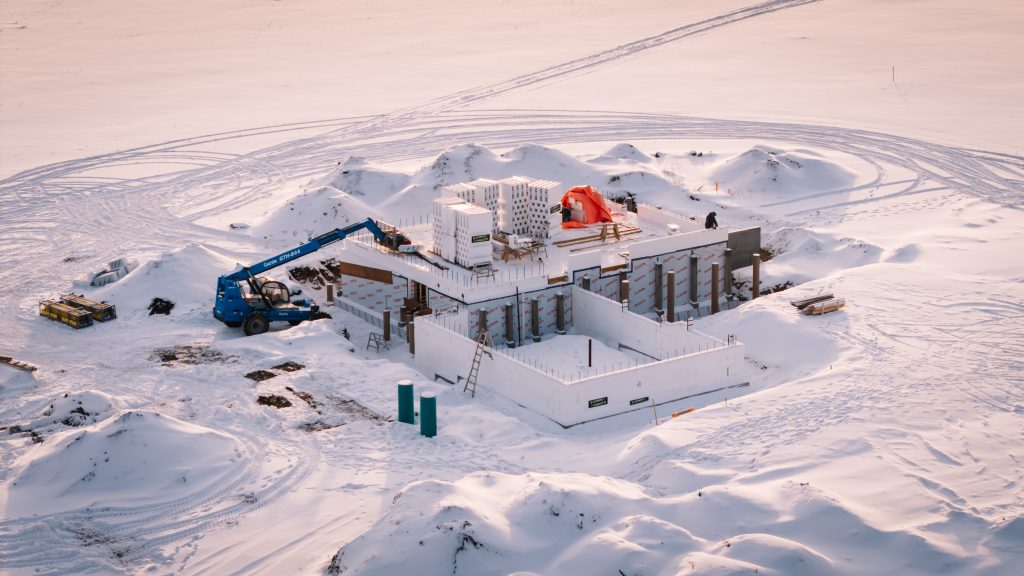
Winter conditions introduced an unexpected challenge.
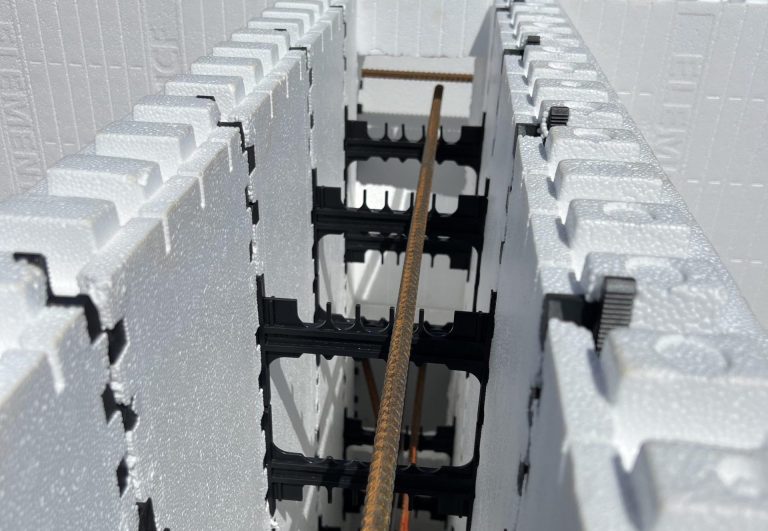
Temperature fluctuations caused snow to melt, enter the ICF forms, and then refreeze. This resulted in ice forming within the wall system between concrete pours.
To resolve this, the forms were heated and hot air was applied using a frost fighter. This allowed the ice to be melted and removed before proceeding with the next lift of concrete.
Without this step, the bond between pours—and overall performance—could have been compromised.
Would you recommend ICF for future Passive House projects—and why?
Yes.
ICF addresses several key performance requirements within a single system. It provides the air control layer, insulation, and reduces thermal bridging, which simplifies the construction process.
It can also improve efficiency and reduce long-term costs. In addition, the materials themselves—concrete and foam—are less susceptible to moisture-related damage, which reduces risk in high-performance assemblies.
If you were to build another ICF Passive House, what would you do differently next time?
From a Passive House and building envelope perspective, there would be very few changes.
This project was carefully considered and refined over time, both as a personal home and as a demonstration of what is possible with high-performance construction.
The only adjustment would be a practical one—wider garage doors. In Alberta, the trucks are large.
Wrapping Up
This phase of the project highlights what it takes to move from design intent to built performance.
On this build, that included:
- Verifying airtightness through testing
- Working through modeling requirements
- Executing critical details in the field
- Adapting to site conditions as they arose
Each step reinforced the same principle. Performance is not defined by a single material or detail. It is the result of how the entire system is designed, executed, and connected.
About the High-Performance Builder
Borren Builders | Central Alberta
Dennis specializes in high-performance ICF construction — building stronger, more energy-efficient homes and foundations across Central Alberta.
If you have questions about this article or are looking to collaborate, Dennis would be happy to engage with you:
This concludes the Passive House Meets ICF series.
From foundation to roof, each phase of the build demonstrates how careful planning and execution come together to achieve high-performance results.
This series documents one builder’s experience using Element ICF on a specific project. Construction methods may vary, and the details shown should not be interpreted as a universal recommendation.