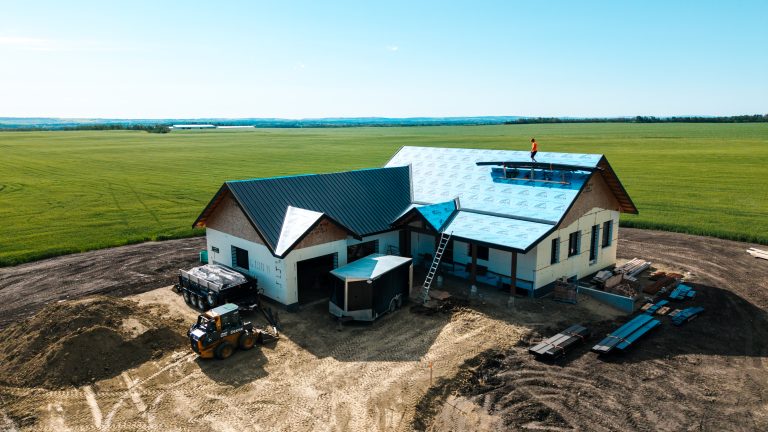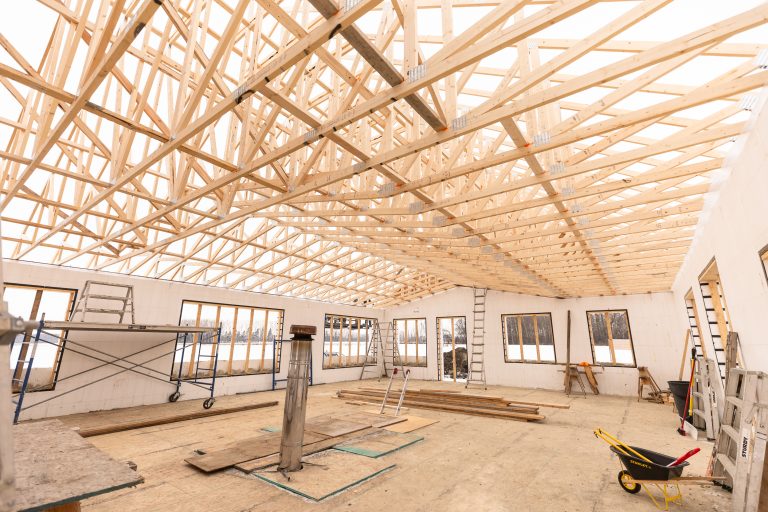
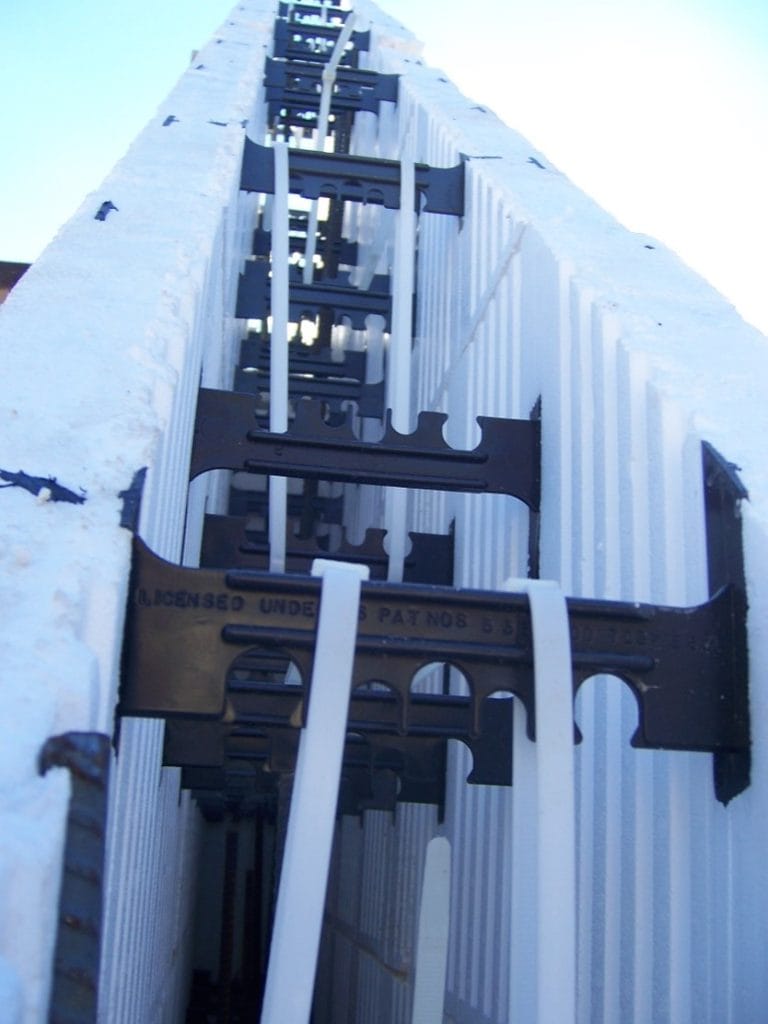

You should build your gable walls with Element ICFs if the gable section is heated or the gable walls require high wind resistance.
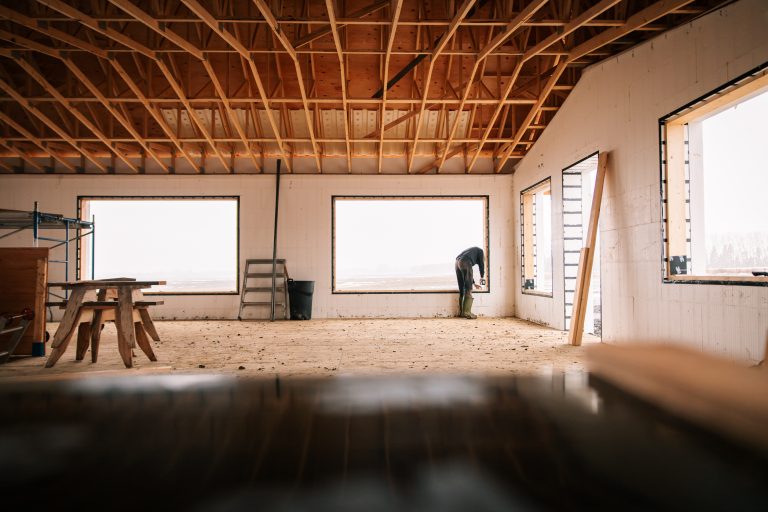
ICFs make a suitable building material for gable walls that enclose a heated section of the home. For example, a high vaulted ceiling in a great room is bound to accumulate rising heat, so blocking heat transfer with highly efficient ICFs is an excellent idea.
On the other hand, if the gable walls enclose an unheated attic, framing can suffice — there’s no need for the additional energy efficiency ICFs provide.
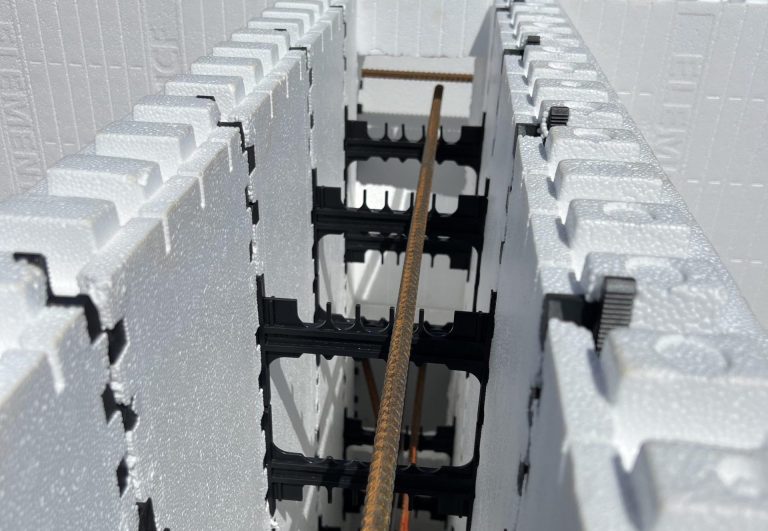
Likewise, ICF gable walls can provide much-needed lateral resistance in regions with strong winds. That’s because ICFs excel at withstanding high wind loads thanks to their reinforced concrete cores.
However, if high wind resistance isn’t a must, a simple gable end truss detail will do just fine.
How to Build Gable Walls With ICFs
There are two primary methods for building gable walls with ICFs:
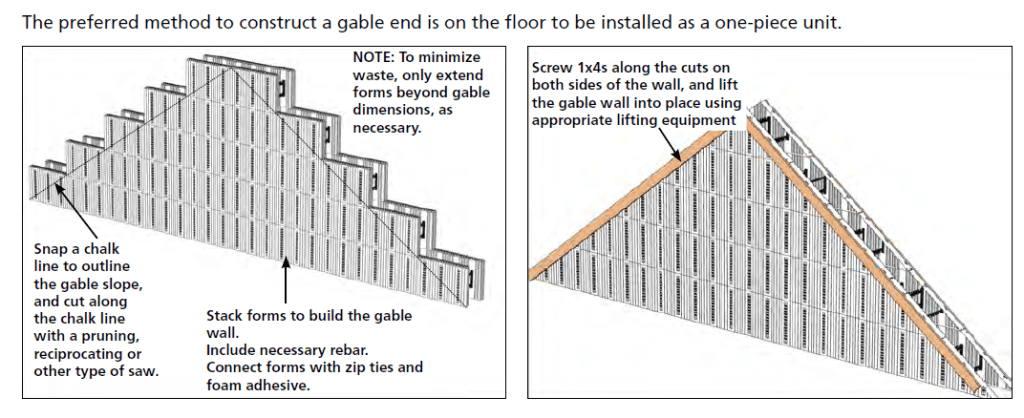
- Assemble the walls on the ground and hoist up. Most builders prefer this option as it’s generally the most straightforward.
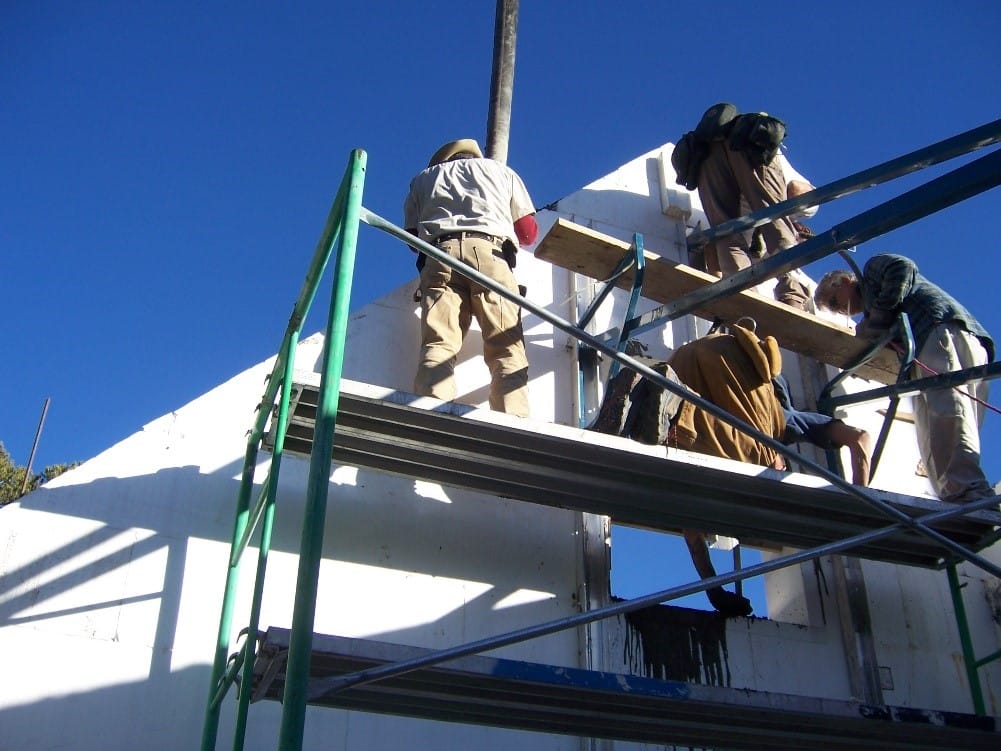
- Build the gable section in place. This option works best on smaller sites with tight access.
Below are a few tips to help you build ICF gable walls.
- Use screws to attach 1×4 strips along the diagonal cuts you’ve made to the ICFs at the top of the gable section.
- Attach plywood to the 1x4s to help contain the concrete during and after the pour. Or, you can use zip ties to help restrict the concrete flow during the pour.
- Trowel from the bottom up after the pour.
- Use scaffolding to brace the ICF gable walls. However, if you do so, make sure the staging is adequately braced to the floor system.
- Have the roof attachment hardware ready, as it must be installed during the concrete pour or immediately after it.
Wrapping It Up
Using Element ICFs to construct gable walls makes sense when the gables enclose a heated space or have to withstand significant wind loads.
If you choose to build your gable walls with Element ICFs, we hope our tips above help you make the installation quick and straightforward.

Passive House Meets ICF — Part 6: Lessons Learned
At A Glance Achieved 0.4 ACH before final sealing Modeling challenges using ICF in Passive House software Field execution lessons from foundation to roof Real-world
Passive House Meets ICF — Part 5: Roof & Ceiling Assembly
At A Glance How Halo Interra creates a continuous roof air barrier Insulation strategy combining rigid board and blown-in cellulose How simple geometry supports airtight
Announcing Our New AIA-Approved CEU Course
At A Glance AIA-Approved: Earn 1 LU/HSW credit while learning advanced ICF design principles Performance Focused: Covers structural strength, continuous insulation, and airtight construction Practical