• Why even experienced builders bring in ICF specialists for complex foundations
• How Paul Stevens of Thermeco delivers near-perfect precision
• Real-world insights from a Muskoka luxury build with Mueller Custom Building
• Techniques that save time, improve accuracy, and keep framers happy
In a previous article, we explored whether homeowners should take on their own ICF foundation or hire a professional installer.
But what about large, complex, or highly detailed builds — the kind with tall walls, heavy rebar, complex elevations, and post-and-beam integration?
For these advanced ICF foundations, even seasoned builders often bring in a dedicated ICF subcontractor. The stakes are higher. Tolerances are tighter. And the cost of rework is massive if the foundation isn’t bang on.
That’s exactly why Mueller Custom Building brought in Paul Stevens of Thermeco for a luxury Muskoka build — a perfect example of collaboration done right.
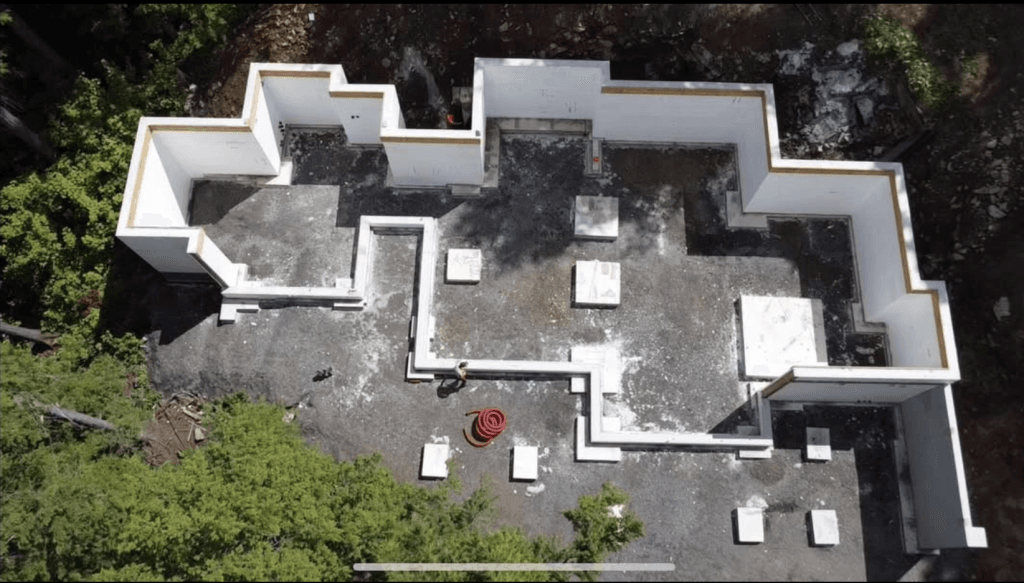
Built right from the ground up. The finished ICF foundation delivers accuracy, strength, and peace of mind.
Meet the Builder: Mueller Custom Building
Led by Max Mueller, Mueller Custom Build operates as a project management–style builder, specializing in luxury builds in the Muskoka area of Ontario.
As a GC, Mueller Custom Build directly oversees sales, estimating, project management, site supervision and quality control. It directly deploys a network of trusted sub-trades: foundation specialists, steel fabricators, post-and-beam carpenters, framers, and architects.
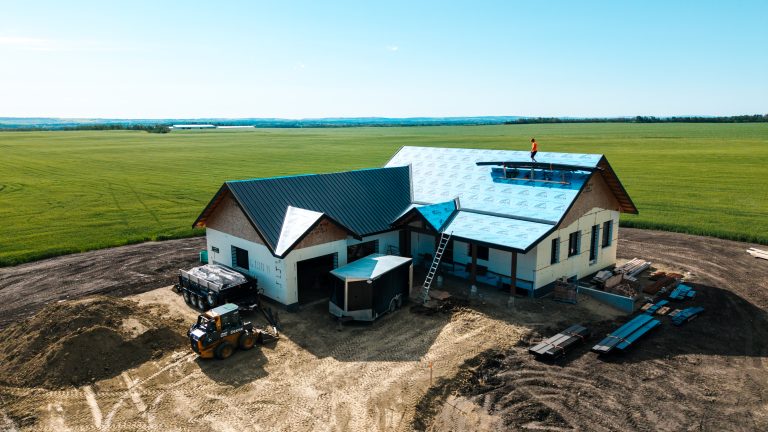
When the Mueller team took on this Muskoka area project that specified a large 3,000 sq ft advanced ICF foundation supporting a luxury 2,430 sq ft luxury-detailed lakefront post-and-beam home, plus Muskoka rooms and porches — they brought in Thermeco to handle the ICF work from footing to waterproofing.
Meet the ICF Specialist: Paul Stevens of Thermeco
Paul Stevens has been building with ICF since 2001, working with many systems like Logix ICF and others before founding Thermeco. Based in Barrie, Ontario, his team has decades of experience with both foundations and full-shell ICF structures.
In 2022, Paul expanded into the Muskoka market, where large-scale, high-end cottage builds dominate. These projects are often full ICF homes — and if not, they’re almost always built on advanced ICF foundations.
Paul didn’t just show up — he immersed himself in the region. He cruised the lakes, took note of construction signage, connected with Muskoka Lumber, joined the Muskoka Home Builders Association, and began networking with the leading local builders.
Through one of these connections, he met Max Mueller, who enlisted him for an upcoming foundation project.
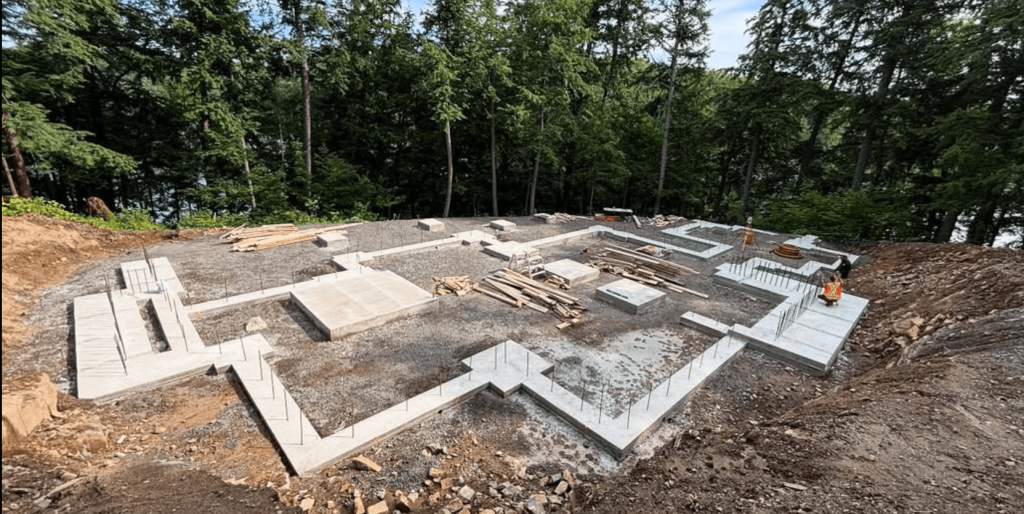
Precision in every pour — the advanced ICF foundation by Thermeco sets the stage for flawless framing above.
The Project: Precision in Motion
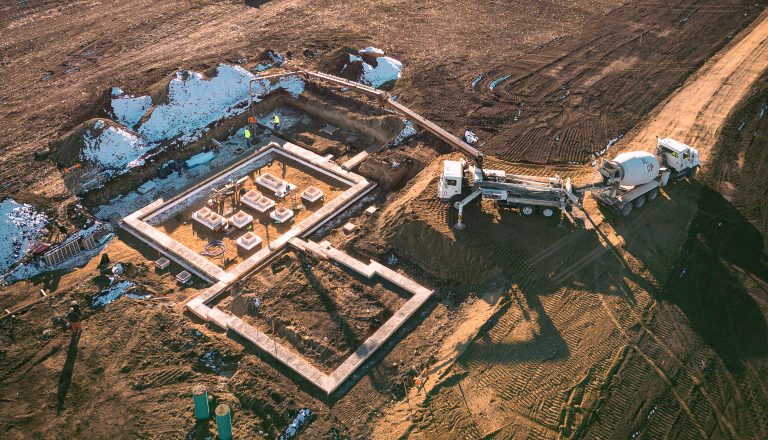
This project brought together four core elements of a complete ICF foundation/lower level package — footing, ICF walls, weeping tile with stone, and waterproofing. Straightforward on paper, but in practice, every piece had to land within a fraction of an inch.
Because the structure above was a post-and-beam design, the alignment between the ICF foundation and the framing was critical. The foundation would set the tone for everything that followed. If it wasn’t bang on, every beam, every floor, and every connection up the line would have been a fight.
That’s where Thermeco came in. Paul coordinated directly with the framer from the earliest stages, verifying layouts, elevations, and anchor points before the first pour. It was a hands-on process — one built on communication as much as precision.
“If your foundation isn’t right, you’re fighting it for the rest of the job,” says Paul.
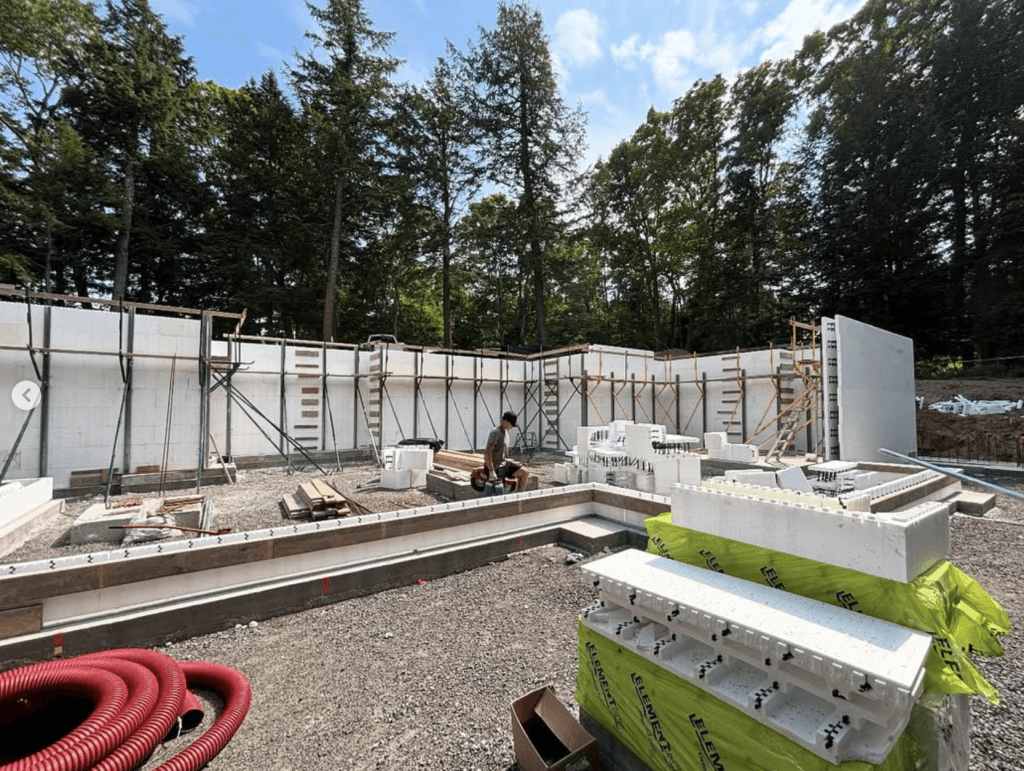
ICF walls in progress on a Muskoka lakefront build — each course carefully aligned, braced, and leveled to ensure a perfectly plumb and true foundation for the post-and-beam structure above.
By the time the walls were stacked and braced, the results spoke for themselves: crisp lines, tight tolerances, and a foundation that set the tone for a flawless build above.
Paul’s ICF Approach
Paul’s work stands out for its mix of precision and practicality — the kind of craftsmanship that makes life easier for everyone who builds on top of his foundations.
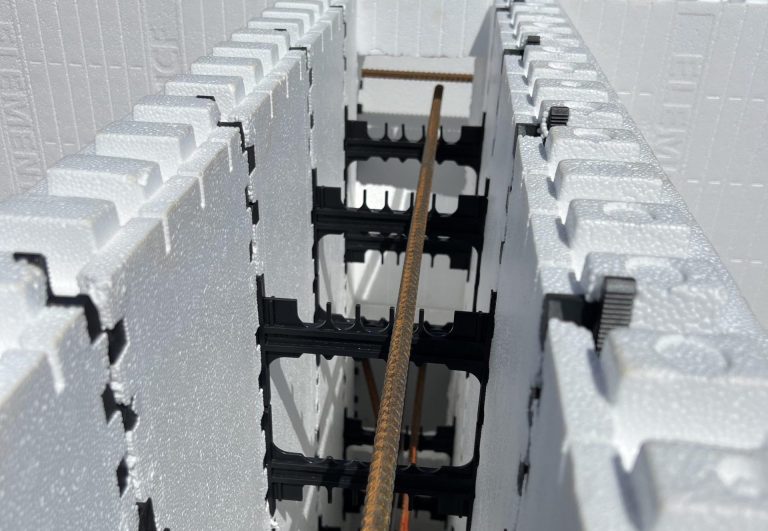
He pours his own footings to within +/- 1/8″, using AccuForm systems for easy rebar placement and exact, repeatable accuracy. By skipping wood spreaders, he eliminates the ridges and bumps that can throw off wall alignment later on — a small detail that pays off big when it’s time to stack ICF.
Once the footings are poured, Paul brings the surveyor back to shoot new lines, ensuring every layout stays true before the first block goes down. His typical footing runs 24” wide by 8” deep — giving a stable, perfectly flat platform for the walls to rise from.
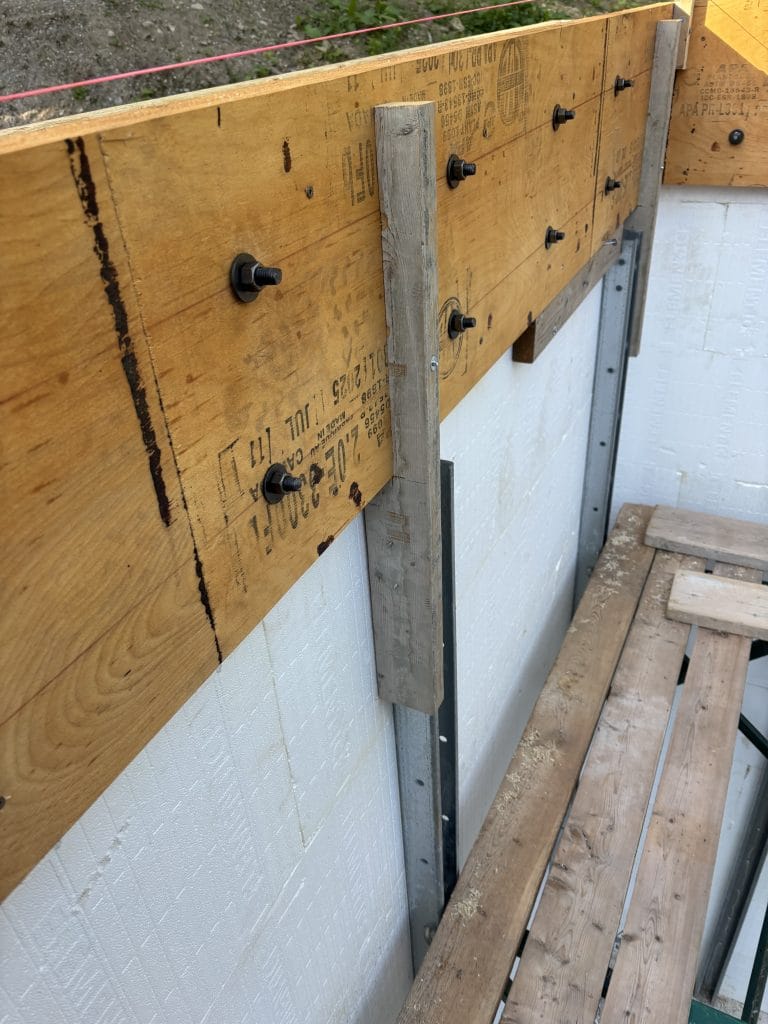
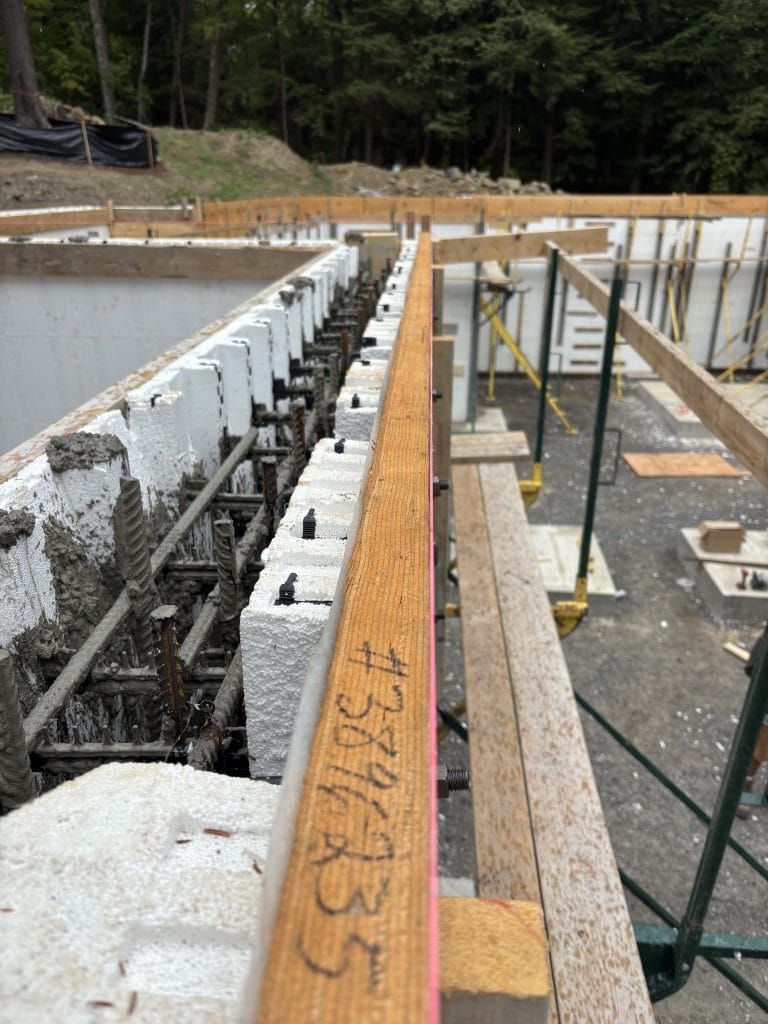
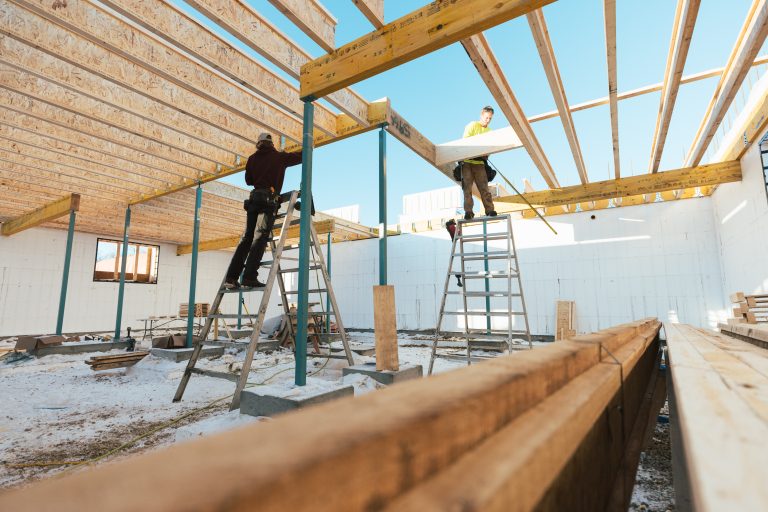
Rim joists perfectly aligned and supported by the bracing system.
Thermeco’s in-progress ICF foundation: tight alignment, consistent bracing, and clean pour prep.
From there, the ICF setup moves fast. Paul installs the ICF channel and pre-cuts all wood straps at the stack seams before arriving on-site, a level of prep that keeps the crew moving smoothly from start to pour. He braces every six webs (about four feet) for ultra-straight walls and, unlike many installers, doesn’t tip his walls inward before pouring — he simply doesn’t need to.
When pour day comes, Paul typically runs a nine-person crew, pulling in hands from other Thermeco projects if needed. He’s always on the hose himself, controlling placement, vibration, and consistency. That hands-on approach is where years of experience really show.
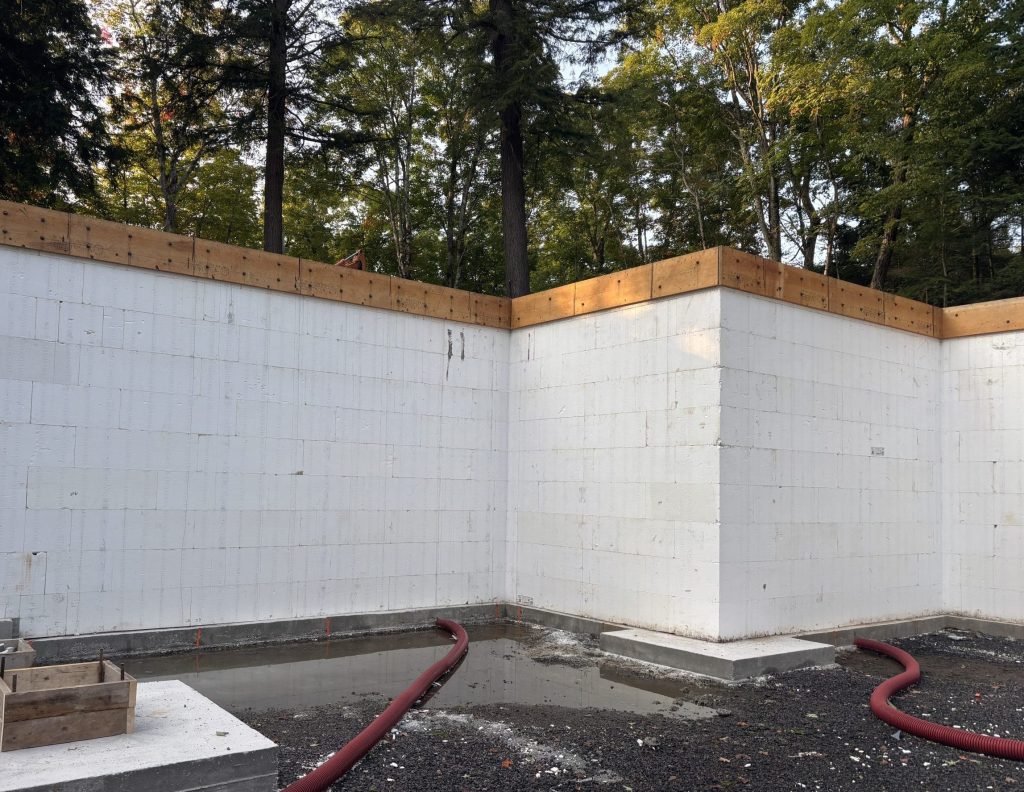
The completed pour reveals a straight, level rim joist — all bracing removed
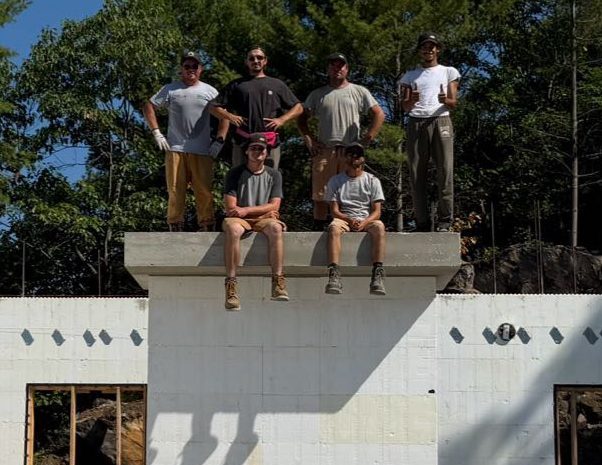
Behind every great build is a great team — Here are some of the member's of Paul’s crew.
The Result: As Good As It Gets
The finished foundation tells the story. The top is level within +/- 1/8”, the walls are plumb and square, and the main floor rim sits perfectly on line — an LVL joist anchored through the ICF bracing for zero settling.
According to the framing crew, “this is as good as it gets.” And it shows. Perfect accuracy at the foundation stage means faster framing, tighter fits, and no callbacks — the kind of seamless performance that keeps builders coming back to Thermeco for their most demanding ICF projects.
Specifying ICF for a foundation creates important efficiencies, especially in the Muskoka region, where seasonal half-load restrictions are in place during the spring thaw. With lightweight ICFs you can begin and substantially complete physical construction of your foundation in the March/April/May period and that is so important with our shorter building season up here.
Plus, ICF is just lighter work and is easier on the crews, as opposed to heavy concrete forms or even framing.
Paul Stevens was extremely reliable and always good to his word. His crew’s work on this project was close to immaculate. When the framing crew took over, they first measured all aspects of the foundation and it was within 1/8” everywhere, which was really impressive.
Wrapping Up
Advanced ICF foundations demand more than standard skill — they require experience, precision, and coordination.
Builders like Mueller Custom Build know that bringing in a specialist like Paul Stevens isn’t an extra cost — it’s an insurance policy for quality and performance.
To learn more about ICF foundation best practices and the pros behind them, explore more case studies at ElementICF.com.
Whether you’re an experienced ICF installer or considering ICF for the first time, we can help. Simply complete this short form for a free quote (or to ask any question at all!).
Ask Anything is a virtual assistant, which utilizes artificial intelligence to answer questions relating to Element ICF (the “Services”). The Services were developed by Logix Brands Ltd. (“Logix”) in conjunction with existing Element ICF product information. You may provide input to the Services and receive output (the “Output”) from the Services based on your input. Due to the nature of the Services and artificial intelligence generally, the Output may not always be accurate. You should not rely on the Output from the Services as factual information or as a substitute for advice. If you require further information regarding the Output and/or Element ICF, please contact a Territory Manager or local Element ICF dealer. Logix, nor any of its affiliates or licensors will be liable for any direct, incidental, consequently or indirect damages (including lost profits) arising out of the use of the Services or adhering to the Output.
Building Soon?
We can help make your ICF dreams a reality! Please let us know how we can help or assist.
Please complete this form to this dealer a question or to request a quote on Element ICF products. If you would like a quote please upload your plan set (if available) and provide as much additional information as possible.
For unlimited access to all of our technical and marketing resources, please enter your information. We will also email you a copy of each of the items you select for quick future reference.